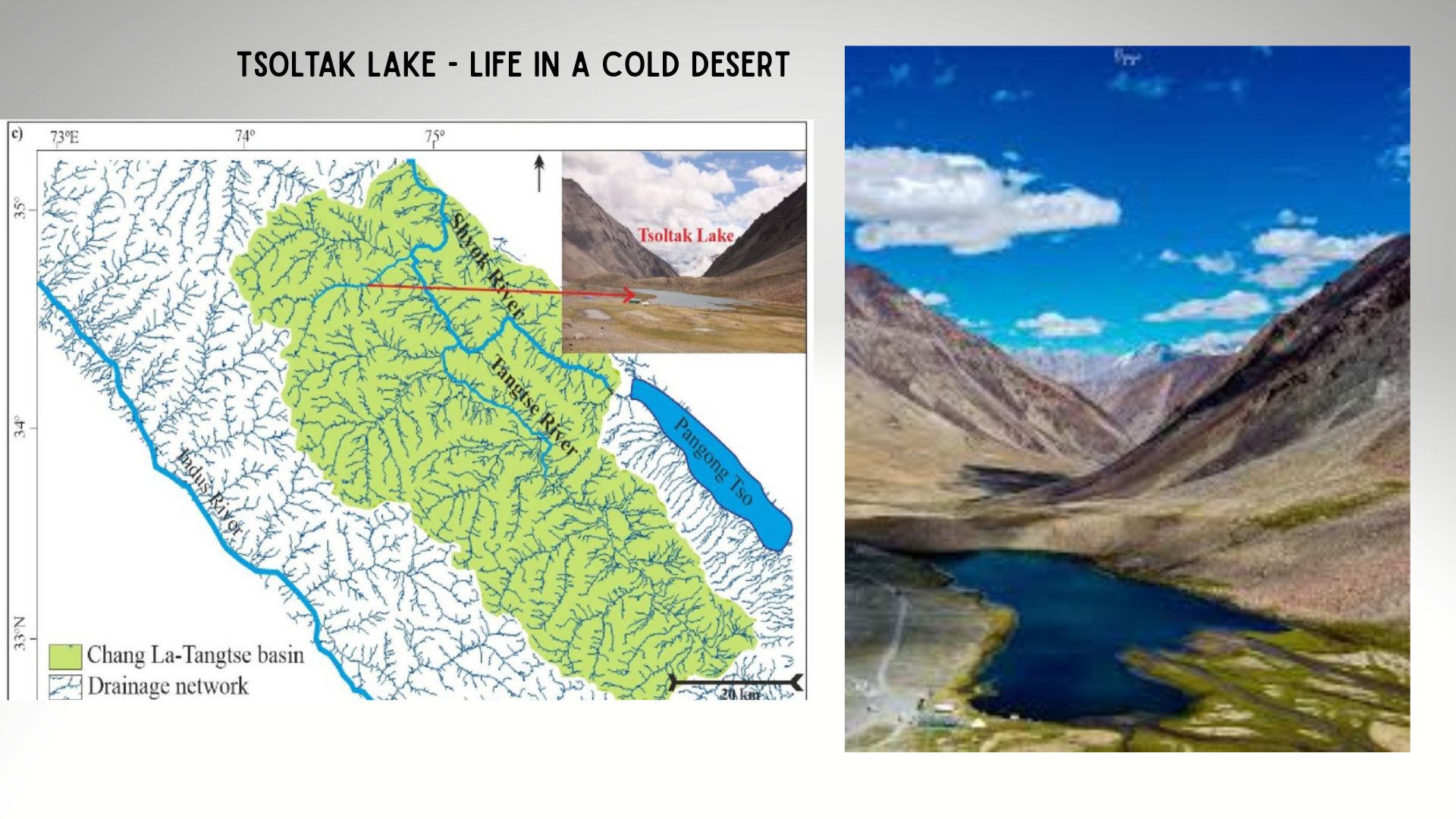
A team of researchers has discovered that a remote, high-altitude glacial lake in the Himalayas is becoming more biologically productive, signalling a clear shift in the region's climate. Deep in the freezing, desert-like environment of the Ladakh Range in the north-western Trans-Himalaya, the Tsoltak glacial lake sits at an altitude of over 4,900 metres. Historically, lakes in this extreme climate have been incredibly nutrient-poor and support very little life. However, by analysing the mud at the bottom of the lake and its surrounding water pools, researchers found that longer summer seasons are allowing microscopic plants and algae to thrive at unprecedented levels. This transformation provides a rare, detailed glimpse into how global warming is altering the fundamental biology of high-altitude ecosystems.
The researchers trekked to the pristine lake during its brief summer melt to collect forty surface sediment samples from the lake bed, feeding streams, and temporary meltwater pools. Back in the laboratory, they analysed these mud samples for specific proxies that could reveal the health of the ecosystem. They sifted through the sediments to identify tiny biological indicators, including pollen, spores, and microscopic algae known as diatoms and desmids. Diatoms are single-celled algae with glass-like shells, and their presence, specifically a type called Didymosphenia geminata, indicates that the waters are clear but experiencing changes in temperature and light.
Alongside the biological specimen, the team measured electrical conductivity or how easily electricity could pass through the water from the samples. Pure water doesn't conduct electricity very well, but water filled with dissolved salts, minerals, and nutrients does. By measuring this, the researchers could determine how mineral-rich the lake and its surrounding pools are.
Using highly sensitive mass spectrometers, the team also studied stable carbon and nitrogen isotopes, which are the same elements but differ in the number of protons in their nuclei. Most carbon and nitrogen atoms are regular-sized and decay into byproducts. But a small number of them are slightly heavier and more stable, meaning they don’t break down or become radioactive over time and get permanently trapped in the mud. By examining the mix of heavy and light carbon and nitrogen, scientists can understand the past environment, including which plants grew around the lake and where the local ecosystem obtained its nutrients.
The researchers found high numbers of certain desmids and diatoms, indicating that the lake was transitioning to a meso-oligotrophic state, meaning it now holds moderate nutrient levels. The team suspects this is likely driven by warming temperatures and a longer ice-free period. Furthermore, stable carbon isotope analysis revealed the type of vegetation growing around the lake. The chemical signatures matched those of C3 and CAM plants, two distinct photosynthetic pathways adapted to different environments. C3 plants absorb carbon during the day (light-dependent), while CAM fixes carbon at night to minimise water loss. Similarly, nitrogen isotopes provided clues about how these limited nutrients cycle through the ecosystem via atmospheric deposition and local bacteria.
By integrating biological communities with chemical and physical measurements of environmental factors, this new study paints a much more holistic picture of the environment. However, the lake's extreme isolation means researchers are mostly restricted to modern surface sediment samples collected over a short time window, limiting the breadth of the study. Moreover, the researchers also found numerous extremely well-preserved, previously unobserved or undocumented microscopic taxa in the mud.
Nonetheless, understanding the subtle ecological shifts in these high-altitude lakes offers a path to conserve the landscape and its biodiversity. The Himalayan region, often referred to as the Third Pole, hosts the most extensive glacial systems outside the polar regions and acts as a massive water tower for billions of people in Asia. As global temperatures rise, knowing exactly how these aquatic ecosystems respond to changing ice cover and nutrient levels helps scientists predict future water quality and availability and help vulnerable populations prepare for the cascading impacts of climate change.