A new study has provided new clues to how the South Asian monsoon dramatically weakened around eight million years ago. It shows that a combination of global cooling and the rising Himalayan mountains drove this massive climate shift. By examining ancient mud and clay from the foothills of the Himalayas in India, researchers have reconstructed millions of years of weather history to understand what controls the life-sustaining rains of the monsoons.
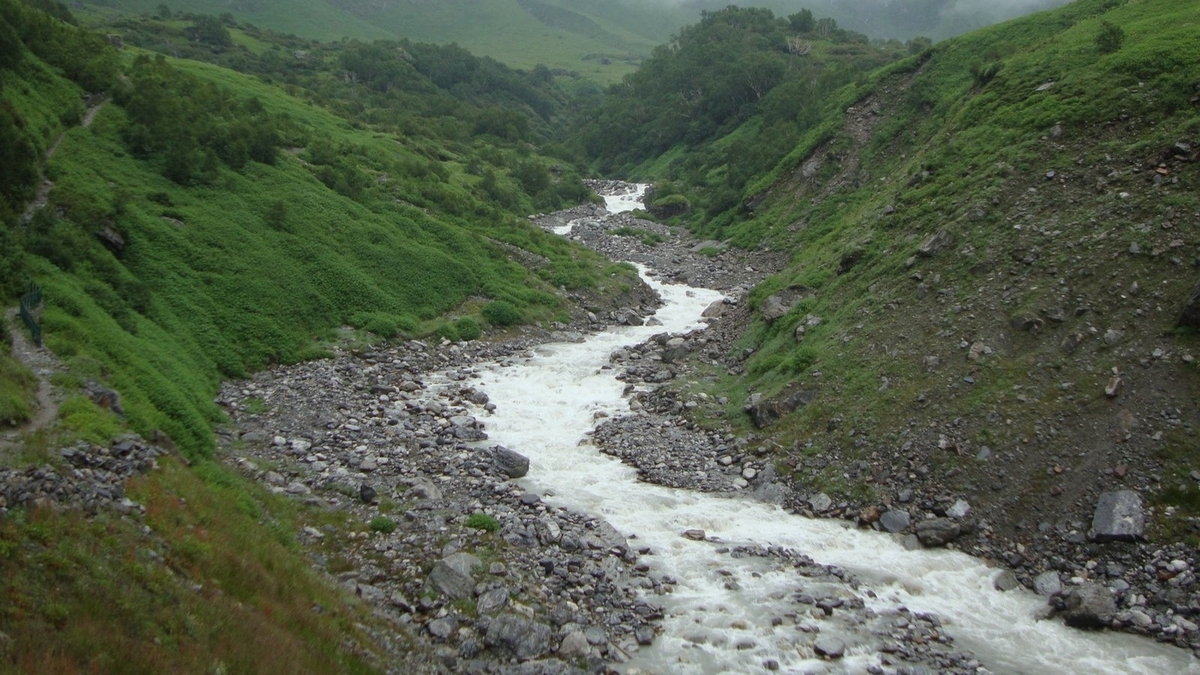
A team of researchers, including those from Birbal Sahni Institute of Palaeosciences, Panjab University, and Jamia Millia Islamia, collected sediment samples dating back to the Miocene period, 12.5 to 4 million years ago. The samples were collected from the Himalayan foreland basin, a vast geological depression that catches all the rock and dirt washed down from the towering Himalayan mountains. They then analysed the chemical makeup and specific types of clay minerals locked in the rocks.
Around a steep mountain, like the Himalayas, a wet, strong monsoon with heavy rains quickly washes away rocks, leading to high physical erosion. But when the monsoon weakens and there is a drop in the rainfall, the climate becomes more seasonal. Under these drier conditions, rocks stay on the ground longer, allowing them to slowly break down through chemical reactions with water.
The researchers analyzed trace elements like lanthanum, scandium, and thorium, alongside microscopic clays like illite, chlorite, and smectite. They noticed a sudden shift in the composition of the samples from around eight million years ago. The sediments changed from minerals formed by rapid physical smashing to clays like smectite, which are formed through prolonged chemical weathering. This geochemical signature clearly indicated that the heavy rains had dropped off significantly, creating a drier climate where water and sediment interacted for much longer periods.
Scientists have long debated whether the dramatic tectonic uplift of the Tibetan Plateau or a worldwide drop in temperatures was the primary culprit for ancient monsoon changes. Much of the past research relied heavily on sediment records pulled from the distant ocean floor, which can sometimes provide an incomplete picture of what was happening directly on land. This new research drastically improves upon earlier studies by providing a continuous, highly detailed geological record taken directly from the continental landmass where the monsoon hits hardest. It strongly suggests that the monsoon's weakening was not caused by just one factor, but rather a complex tag-team effort between the shifting tectonic plates pushing up the Himalayas and a global cooling event that altered atmospheric circulation patterns.
However, the researchers acknowledge that separating the exact climatic effects from the physical erosion caused directly by the sheer, violent force of mountain building remains incredibly challenging. To fully understand the past, they note that future studies will require even more precise data tracking, exactly where the ancient dirt came from, along with improved computer simulations to model these prehistoric climates.
Today, the South Asian monsoon is an absolute lifeline, supporting the agriculture, economies, and daily survival of billions of people across the Indian subcontinent. By carefully learning how past global temperature changes and geographical shifts successfully altered the monsoon, scientists can build much better forecasting models. This allows us to predict how our current rapidly changing climate might disrupt future rainfall patterns or extreme weather events.