Researchers in India have discovered that monitoring sewage in specific neighbourhoods accurately tracked the spread of COVID-19 during Bengaluru’s first Omicron wave, but it failed to provide an early warning of the outbreak. The researchers from International Centre for Theoretical Sciences (ICTS) - TIFR, Tata Institute for Genetics and Society, ARTPARK, and Indian Institute of Science (IISc) mapped the city's complex underground sewer network to over two dozen sewage treatment plants to see if sewage could predict a surge in COVID-19 infections.
When people are infected with a virus like SARS-CoV-2, they shed viral genetic material in their faeces and respiratory secretions, often even if they have very mild or no symptoms. By collecting samples of water flowing into sewage treatment plants and testing them for viral RNA, scientists can measure the total viral load, and by extension, the spread of the disease, of an entire community.
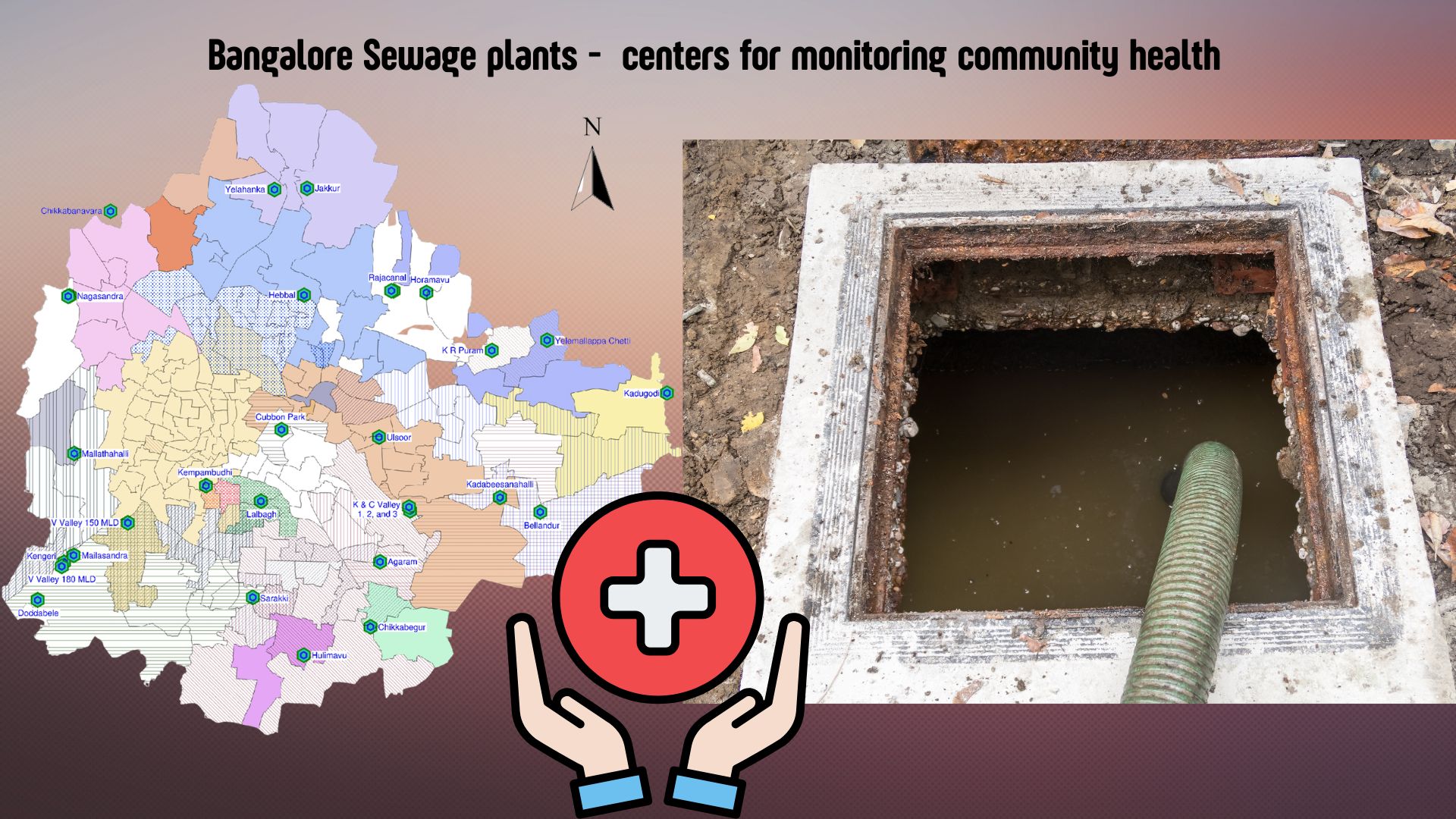
To do this effectively in Bengaluru, a city of 14 million people, the research team used geographical mapping software to trace which of the city's 198 administrative wards flushed their waste to specific treatment plants. The team successfully mapped Bengaluru's 198 administrative wards to 26 specific STPs. This allowed them to track the virus at a granular, neighbourhood level rather than just looking at a city-wide average. Once the geographical locations were mapped, they used a statistical tool called change-point detection to identify the exact moment when viral levels began to climb.
Next, they compared this data with local health clinic reports from November 2021 to January 2022, during the Omicron wave of the COVID-19 pandemic. They hoped to see if sewage could predict a surge in infections. However, while the two sets of data matched, their study revealed that the viral spikes in the sewers happened at the same time as the surge in positive clinical tests. Contrary to previous assumptions that sewage testing could predict an outbreak days in advance, the study found no reliable lead time for an early warning system.
Although sewage monitoring cannot predict an outbreak, the authors note that because wastewater data perfectly mirrors clinical data, it is still a highly reliable tool for real-time monitoring of disease spread. This is especially valuable when routine clinical testing, like PCR swabs, is reduced or unavailable. To improve wastewater surveillance and potentially achieve an early warning system, the authors recommend increasing the sampling frequency to daily during infection peaks. They also suggest sampling from local neighbourhood manholes rather than just at massive treatment plants to detect highly localised outbreaks more effectively.