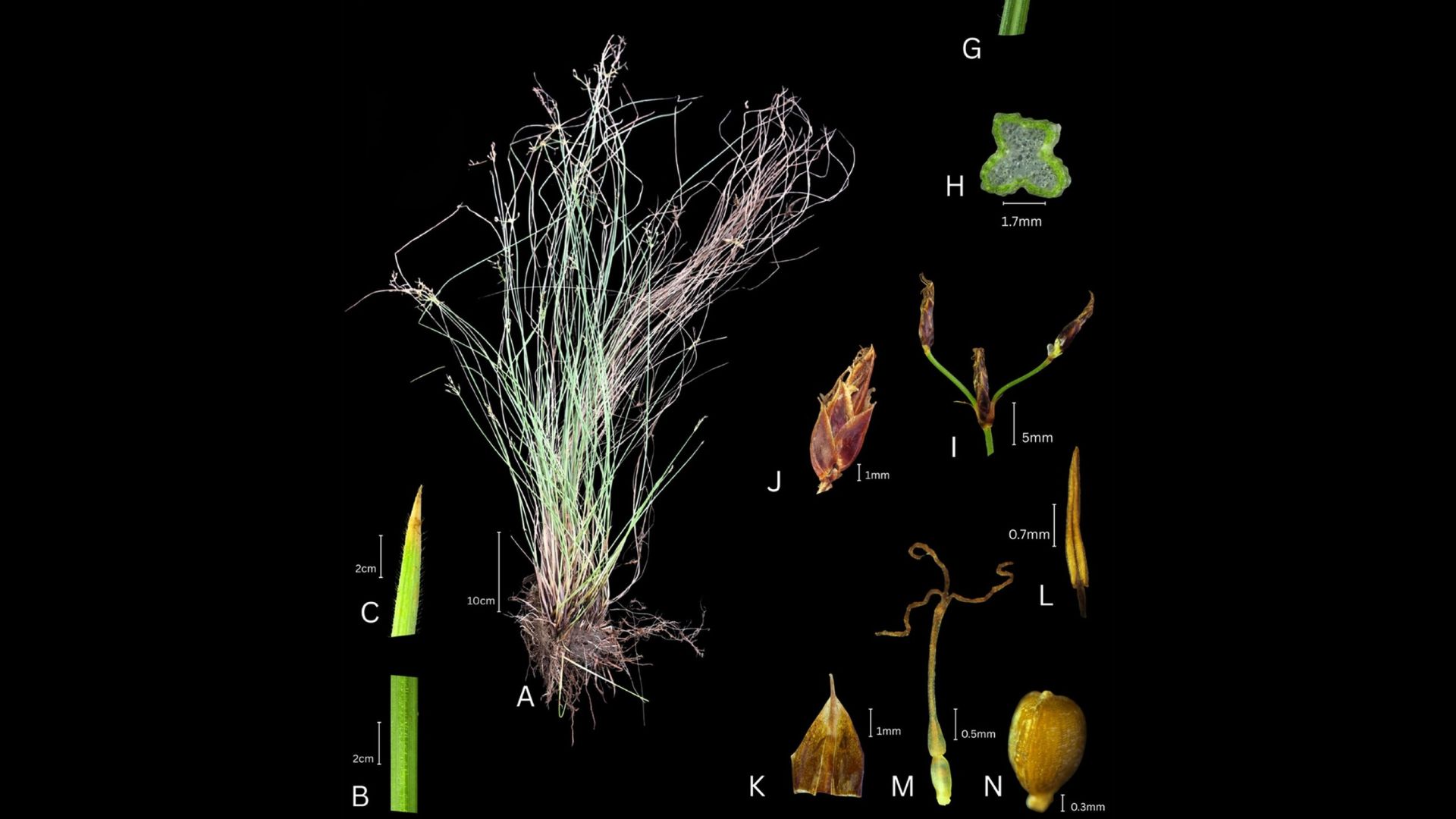
Researchers have discovered a new plant species in the high mountains of the Western Ghats in India. Named Fimbristylis wayanadensis, this grass-like plant, known as a sedge, was identified during a recent expedition in the Wayanad district of Kerala. Fimbristylis wayanadensis, named to honour the place where it was first discovered, was found clinging to life in the transitional zones between rocky landscapes and high-altitude grasslands. The discovery highlights the incredible biodiversity of India's mountain ecosystems. The research team spotted the unique plant growing at elevations up to 1,900 meters and quickly realised that its distinct physical traits meant it was a species that had never been officially recorded before.
The breakthrough occurred when researchers were conducting fieldwork in the Thollayiram forest and Chembra peak areas in Wayanad in late 2022. While trekking through the rugged terrain, they noticed a peculiar sedge that initially looked remarkably like a common relative called Fimbristylis aphylla. However, by closely examining the plant's physical structure in the field and later conducting detailed laboratory comparisons with historical botanical records and preserved herbarium specimens, the team confirmed they had found an entirely new branch on the tree of life.
Sedges are grass-like plants that typically feature triangular stems, and this new species belongs to a highly diverse botanical family. Fimbristylis wayanadensis possesses a unique set of characteristics that clearly separate it from its closest known cousins. Unlike F. aphylla, which has relatively short, hairless leaves, the newly discovered species sports long leaves that stretch as tall as or taller than its hairy stems. It also produces fewer flower clusters, known as spikelets, which are rich chestnut-brown rather than yellowish. Furthermore, the tiny nuts it produces are larger and smoother, with microscopic rectangular patterns on their surfaces. While the plant also shares some superficial similarities with another species called F. cinnamometorum, it lacks that cousin's warty nuts and well-developed leaf blades, firmly establishing it as a distinct species.
Currently, this rare plant is only known to exist in these specific, high-altitude mountain patches. Because the plant has been spotted only in a few scattered locations and its total population size remains unknown, scientists have temporarily classified its conservation status as "Data Deficient." This means that while a fascinating new piece of the natural world has been brought to light, much more research is urgently needed to better understand this new member.