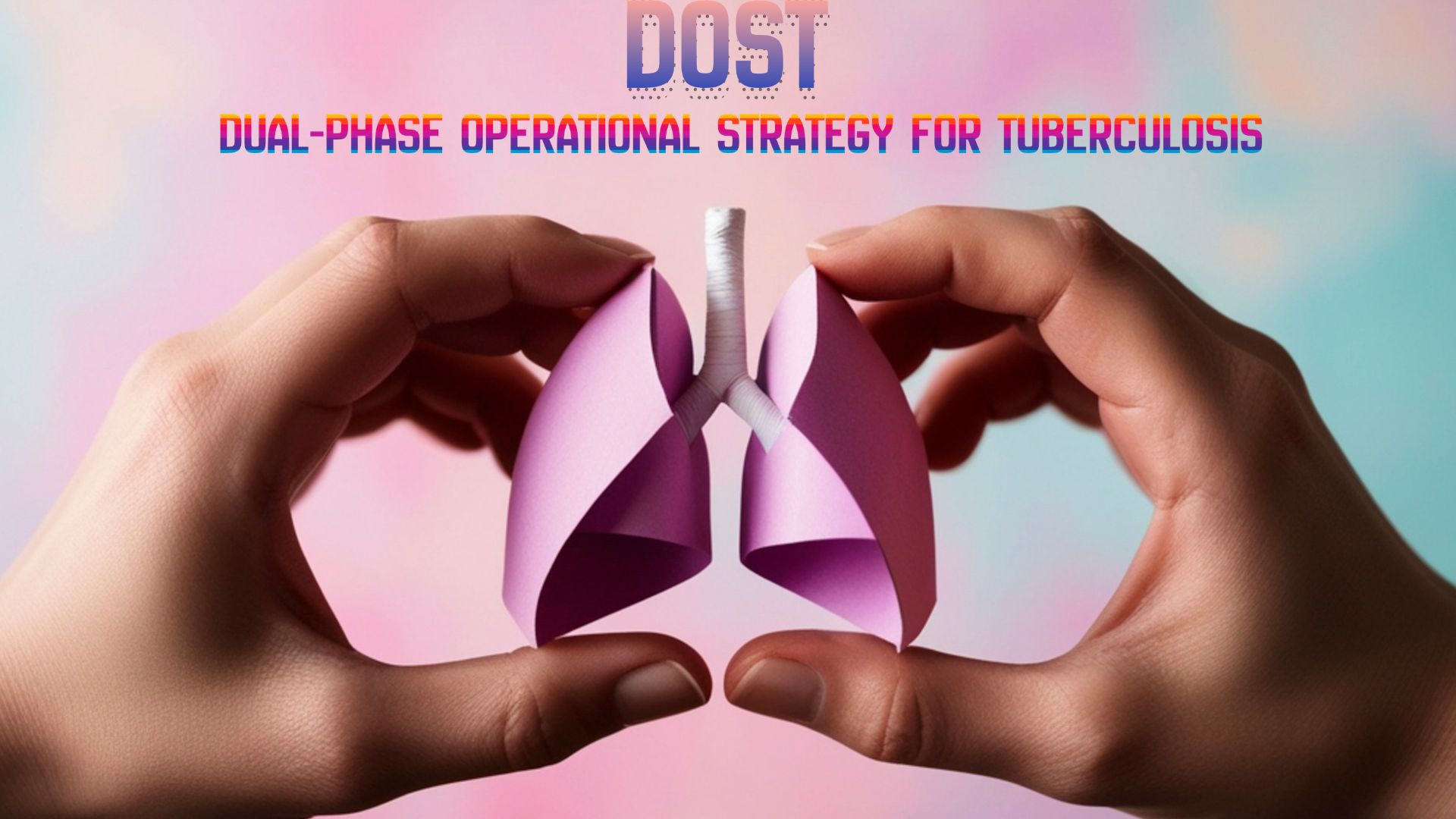
Public health researchers have proposed a new, highly adaptable strategy called DOST to eliminate tuberculosis in India, a nation that currently bears a quarter of the world's total burden of the disease. The new framework was by developed by an international collaboration that included All India Institute of Medical Sciences, National TB Elimination, USAID, Stop TB Partnership, and Boston University School of Medicine, USA. It draws inspiration from historic disease eradication successes to actively target the illness while simultaneously addressing its social root causes, such as severe malnutrition. By splitting the elimination timeline into two distinct phases tailored to local infection rates, scientists believe they can finally outpace the bacteria's spread and prevent future outbreaks.
To build this framework, researchers analysed historical epidemiological data from successful disease elimination campaigns, such as the global efforts to eliminate polio, smallpox, and malaria. They compared these historical blueprints alongside the promising real-world results of India's recent nationwide TB screening program, the TB Mukt Abhiyaan. The team realised that a rigid, national approach does not work for a country as vast and diverse as India. Instead, the team devised the Dual-phase Operational Strategy for Tuberculosis elimination, cleverly abbreviated to DOST, which translates to "friend" in Hindi. DOST relies on breaking the elimination effort into an aggressive attack phase followed by a careful consolidation phase, recognising that tuberculosis is not just caused by an infectious bacterium, but is deeply driven by structural and social factors.
The first phase, known as Intensive Disease Reduction, is deployed in high-burden regions to rapidly cut transmission. It utilises community-wide screening, artificial intelligence-guided vulnerability mapping, rapid molecular testing, and immediate treatment. The researchers noted that during a recent Indian campaign utilising this exact scientific approach, mobile units and portable X-ray machines successfully identified over 900,000 hidden, symptom-free cases that would have otherwise continued to spread the disease.
Once a region's infection rate drops sufficiently, the local programme pivots to the second phase, Focused Progression Reduction. This phase works as a biological watchguard, using preventive therapies for household contacts and tackling the root drivers that cause dormant tuberculosis infections to flare up into active disease, such as malnutrition, diabetes, and HIV.
By transitioning to DOST, the public health response becomes highly flexible and deeply person-centred. It incorporates vital social and economic support, such as cash transfers and food baskets for vulnerable patients. Furthermore, it allows different states to calibrate their responses to their specific local epidemiology, rather than forcing low-burden areas to waste resources on the heavy-handed tactics required in high-burden zones.
However, the researchers acknowledge a few hurdles in their proposed framework. A major limitation is the current reliance on cross-sectional surveys to estimate local infection rates, which are based on assumptions about how long the disease lasts and how stable its transmission is in a community. There is also a lack of full economic evaluations to confirm the exact cost-effectiveness of such massive, nationwide campaigns. Furthermore, because scientists do not yet have a reliable biological marker to predict exactly who will develop active tuberculosis in the near future, the rollout of preventive therapies has to be scaled up broadly among household contacts, rather than perfectly targeting only those on the brink of falling ill.
Nevertheless, the DOST framework offers a highly pragmatic, compassionate pathway toward a disease-free future. By combining medical diagnostics with fundamental social support, this research provides a vital roadmap that could save millions of lives. Ultimately, this person-centred approach benefits society by ensuring that the fight against one of the world's deadliest infectious diseases is socially equitable, proving that ending tuberculosis requires both scientific precision and a helping hand.