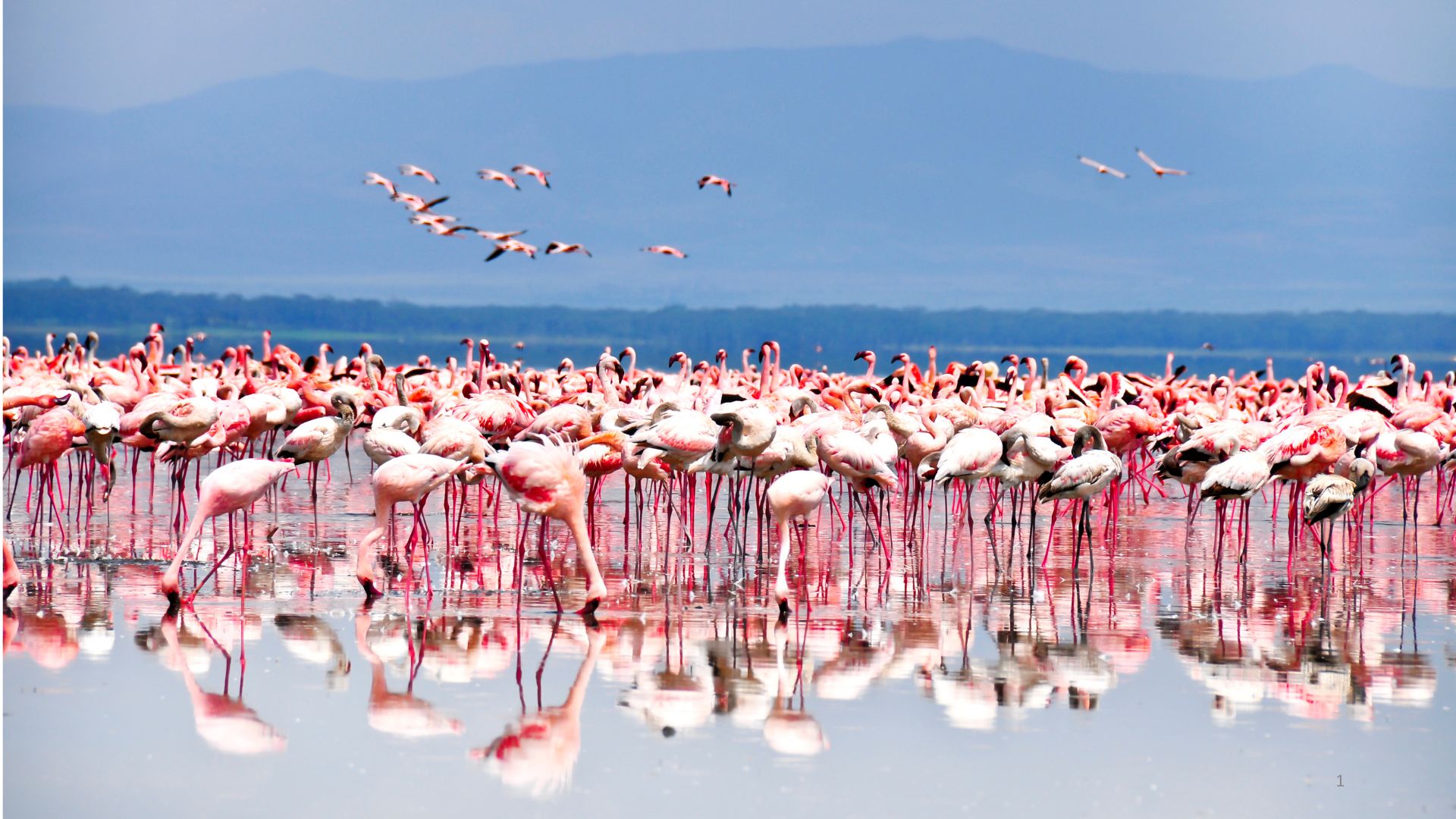
Researchers have used decades of satellite imagery and found an ecological crisis at Sambhar Lake, the country's largest inland saltwater wetland. The Sambhar Salt Lake is situated about 80 km southwest of Jaipur, Rajasthan. By analysing data stretching from 1984 to 2023, the team discovered that natural water levels are drastically shrinking, while artificial salt mining pans and suffocating algal blooms are rapidly expanding. The study by researchers from the National Remote Sensing Centre, Indian Space Research Organisation (NRSC-ISRO), and VIT-AP University highlights how human activity and changing climates are threatening a critical habitat that supports tens of thousands of migratory flamingos.
The team relied on multicoloured satellite imagery from the Landsat 8 satellite, a joint NASA and USGS Earth observation satellite, and global surface water datasets. Using this data, they tracked changes in the landscape over nearly forty years. The team then applied a machine-learning algorithm called Random Forest to teach computers how to automatically categorise different types of land, such as scrub, barren earth, and water. They also used mathematical tools called spectral indices, which use combinations or ratios of spectral bands, such as visible light, near-infrared, and shortwave infrared. They are designed to highlight specific features of the Earth's surface and minimise variables like atmospheric noise.
The analyses allowed the team to develop two specific indices. The Normalised Difference Water Index (NDWI) helped them map clear water by looking at how the surface absorbs infrared energy, while the Surface Algal Bloom Index allowed them to spot the unique light signatures reflected by floating green algae.
The study shows that the lake's deterioration is due to a chain reaction of environmental stress. As rivers flowing into the lake have been blocked by dams, and local groundwater is excessively pumped out by illegal salt mining operations, the lake's water has become alarmingly shallow. This extreme shallowness causes the water to heat up faster and evaporate, leaving behind highly concentrated salts and agricultural nutrients. These warm, nutrient-dense, and stagnant waters create the perfect breeding ground for massive algal blooms.
The researchers found that these blooms spike just before the monsoon season, when water levels are at their lowest, covering up to 43% of the lake's natural water surface in 2022. As the algae proliferate, they alter water chemistry and deplete oxygen levels, disrupting the entire food chain. This makes it incredibly difficult for native salt-tolerant plants, microscopic brine life, and the iconic flamingos that feed on them to survive, leading to delayed breeding and declining bird populations. The study also shows that while salt pans grew by nearly two square kilometres between 2022 and 2023, the natural water area heavily declined.
By pinpointing exactly where and when the lake is most vulnerable, the research provides government officials and conservationists with a clear roadmap for action. It serves as an early warning system that can help authorities crack down on illegal salt mining, better manage groundwater extraction, and restore vital river inflows. Balancing the economic value of salt production with the urgent need for ecological conservation will ensure that this unique natural wonder remains a thriving sanctuary for wildlife and communities for generations to come.