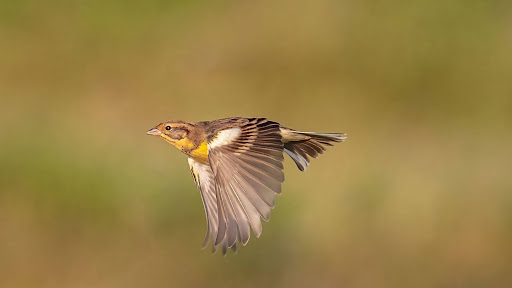
In a historic step forward for avian conservation, the first multi-country Joint Yellow-breasted Bunting Winter Roost Count has successfully concluded, providing the first reliable population baseline for one of Asia's most threatened birds. Conducted between mid-February and mid-March 2026, the census was the result of a massive collaborative effort spanning six wintering countries: Nepal, India, Myanmar, Thailand, Laos, and Cambodia.
The initiative brought together a diverse coalition of universities, government ministries, and regional conservation organisations. Key participants included the Bird Conservation Society of Thailand, NatureLife Cambodia, Bird Conservation Nepal, BANCA (Myanmar), Bird Count India, and the National University of Laos, among many other local monitoring networks and ecological groups.
This monumental effort comes at a critical time for the Yellow-breasted Bunting (Emberiza aureola). Prior to the 1990s, the species was among the most abundant landbirds in Eurasia, with an estimated global population of over 100 million. Flocks numbering in the tens of thousands once filled the skies over Asian farmlands. However, driven by massive overhunting along its migratory routes and compounded by habitat destruction and agrochemical use, the species suffered a catastrophic population crash of up to 95%. It has been listed as Critically Endangered on the IUCN Red List since 2017.
To properly assess the bird's status, researchers focused on the wintering grounds where the species concentrates in roosts. Early in the morning, surveyors stationed themselves around known roosting sites across the region to count the birds as they took flight.The joint census recorded a total of 187,310 Yellow-breasted Buntings. The data revealed Thailand as the primary stronghold for the species, recording the highest count with 126,076 birds across six sites. Myanmar reported 49,086 birds across three sites, Cambodia reported 10,407 birds across two sites, and Nepal reported 1,741 birds across five sites.
Data from the remaining countries highlighted the logistical challenges of wildlife monitoring. In India, primary roosts proved too difficult to access, though several hundred birds were observed outside of the roosting areas. In Laos, no major roost was identified during the survey period, leaving their regional count unavailable.
Researchers are careful to note that the figure of 187,310 represents a starting baseline rather than an absolute total. Not all roost sites were covered during the census, and a portion of the population does not stay at roosts during the Night. To supplement the roost count, a complementary Winter Bunting Count was held from November 2025 to April 2026. This citizen-science initiative encouraged birdwatchers to log sightings on the eBird database. The effort yielded 25,232 entries covering eight species of buntings from 20 different Asian countries and regions, providing a wealth of supplementary data for future analysis.
The success of the 2026 census marks a turning point in Asian landbird conservation. For the first time, researchers have tangible, cross-border data to understand the real population size of the Yellow-breasted Bunting, which is essential for evaluating the effectiveness of ongoing conservation strategies. However, the implications of these findings extend far beyond a single species. Conservationists involved in the count warn that the near-eradication of the once-abundant Yellow-breasted Bunting acts as an urgent "warning of a coming ecological disaster."
Looking ahead, the international coalition plans to build on this year's success. The team aims to expand the roost count to include greater site and country coverage in the coming years. A standardised census manual is currently under development to train a wider pool of surveyors. By strengthening this collaborative international network, conservationists are ushering in a vital new era of landbird protection across Asia.
Organizations that participated in the first International Yellow-breasted Bunting Roost Count are: Bird Count India (India) and the Assam Bird Monitoring Network (Assam), Bird Conservation Nepal, Pokhara Bird Society and Himali Anusandhan Kendra (Nepal), Biodiversity And Nature Conservation Association (BANCA) and Kyone Ka Pyin - Tap Seik Community Conservation Group (Myanmar), Bird conservation Society of Thailand, Khon Kaen University, and King Mongkut’s University of Technology Thonburi (Thailand), NatureLife Cambodia, Wildlife Conservation Society, Cambodia bird guide association, Sam Veasna Conservation Tour, Ministry of Environment and Khmer Nature Photographer (Cambodia), and National University of Laos (Laos).