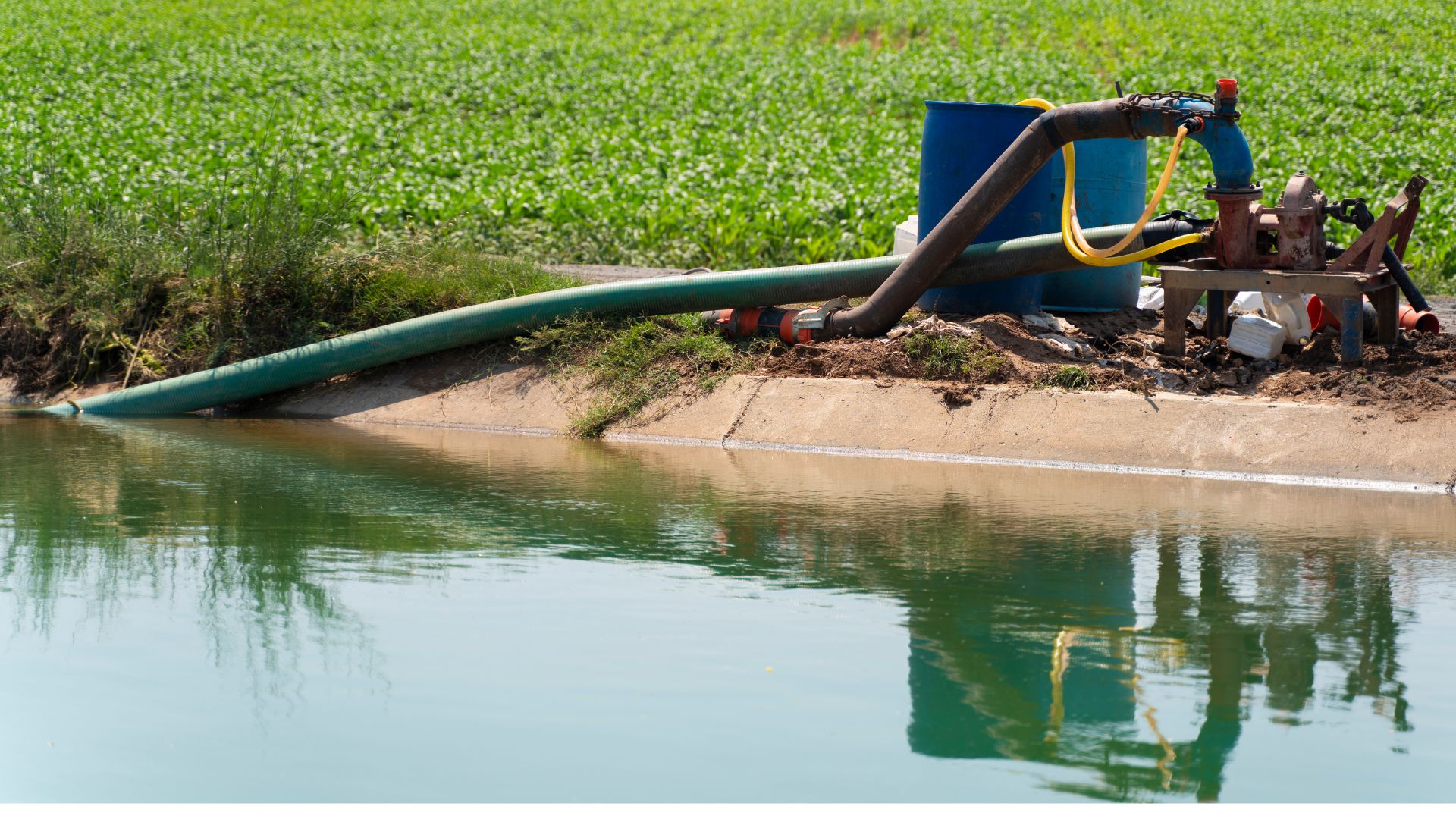
- A new study by researchers Anuj Prakash Kushwaha and Vimal Mishra from IIT Gandhinagar exposes a critical flaw in current computer models used to monitor India's water supply.
- By comparing traditional hydrological simulations with high-precision gravity data from NASA’s GRACE satellite mission spanning 2003 to 2020, the team isolated the impact of Human-induced Evapotranspiration (H-ET).
- The findings indicate that actual annual water loss averages 726.5 mm/year—significantly higher than the 560.5 mm/year predicted by natural weather models.
- This gap is driven entirely by human agricultural activities, particularly during the dry, pre-monsoon months (April to June) when groundwater pumping artificially boosts evaporation.
- Notably, water availability is overestimated by more than 50% in the Indus, Mahi, and Pennar basins, and by 30% to 40% across other major basins including the Ganga and Godavari.
- Experts warn that relying on these flawed models risks driving unsustainable policies and accelerating the depletion of critical underground aquifers.
Researchers from the Indian Institute of Technology (IIT) Gandhinagar have discovered that human activities, particularly farming and groundwater pumping, are causing far more water to vanish into thin air across India than previously thought. By comparing satellite data with computer models spanning from 2003 to 2020, researchers found that current estimates of available water in several major Indian river basins are exaggerated by up to 50% because they fail to account for the massive scale of human-induced evapotranspiration.
Evapotranspiration is the natural process by which water evaporates from soil and water bodies, along with the moisture naturally released by plants. In heavily farmed regions, humans artificially boost this process by pumping groundwater and diverting rivers to irrigate crops, especially during the dry, non-monsoon seasons. To measure this otherwise-ignored water loss, the researchers used a two-step approach.
First, they ran five different computer simulations, or hydrological models, to calculate the natural evapotranspiration that would occur solely based on weather patterns such as rainfall and temperature. Next, they examined data from NASA’s GRACE, or Gravity Recovery and Climate Experiment, satellite mission. These highly sensitive satellites orbit the Earth and measure tiny changes in the planet's gravity caused by the shifting mass of water. This provides an accurate picture of total water loss, capturing both natural evaporation and the water pumped out by human hands. By subtracting the models' natural estimates from the satellites' actual measurements, the scientists successfully isolated the exact amount of extra water being lost purely due to human agricultural activity.
The study found that actual evapotranspiration, measured by GRACE satellites, is significantly higher than natural evapotranspiration predicted by the computer models. The actual average annual water loss is about 726.5 mm/year, compared to the 560.5 mm/year predicted by the models. This gap represents Human-induced Evapotranspiration (H-ET), primarily caused by farming and irrigation. They show that available water is overestimated by more than 50% in the Indus, Mahi, and Pennar basins, and by 30% to 40% in the Ganga, Godavari, Krishna, Mahanadi, Narmada, Tapi, and Brahmani basins.
The human impact on water evaporation is most pronounced during the dry, non-monsoon months (particularly the pre-monsoon months from April to June) due to intensive irrigation of winter and summer crops. During these dry periods, human activities account for 30% to 50% of total evapotranspiration in irrigation-intensive basins.
South Asia remains one of the most climate-vulnerable regions in the world, facing rapid population growth and an immense reliance on agriculture for survival. If governments continue to rely on flawed models that overestimate water availability, they risk creating unsustainable policies, accelerating the depletion of critical underground aquifers, and mismanaging crop irrigation. By revealing the true extent of human-driven water loss, this work provides policymakers with the precise data needed to design realistic water conservation strategies, ensuring that future generations do not face catastrophic water shortages.