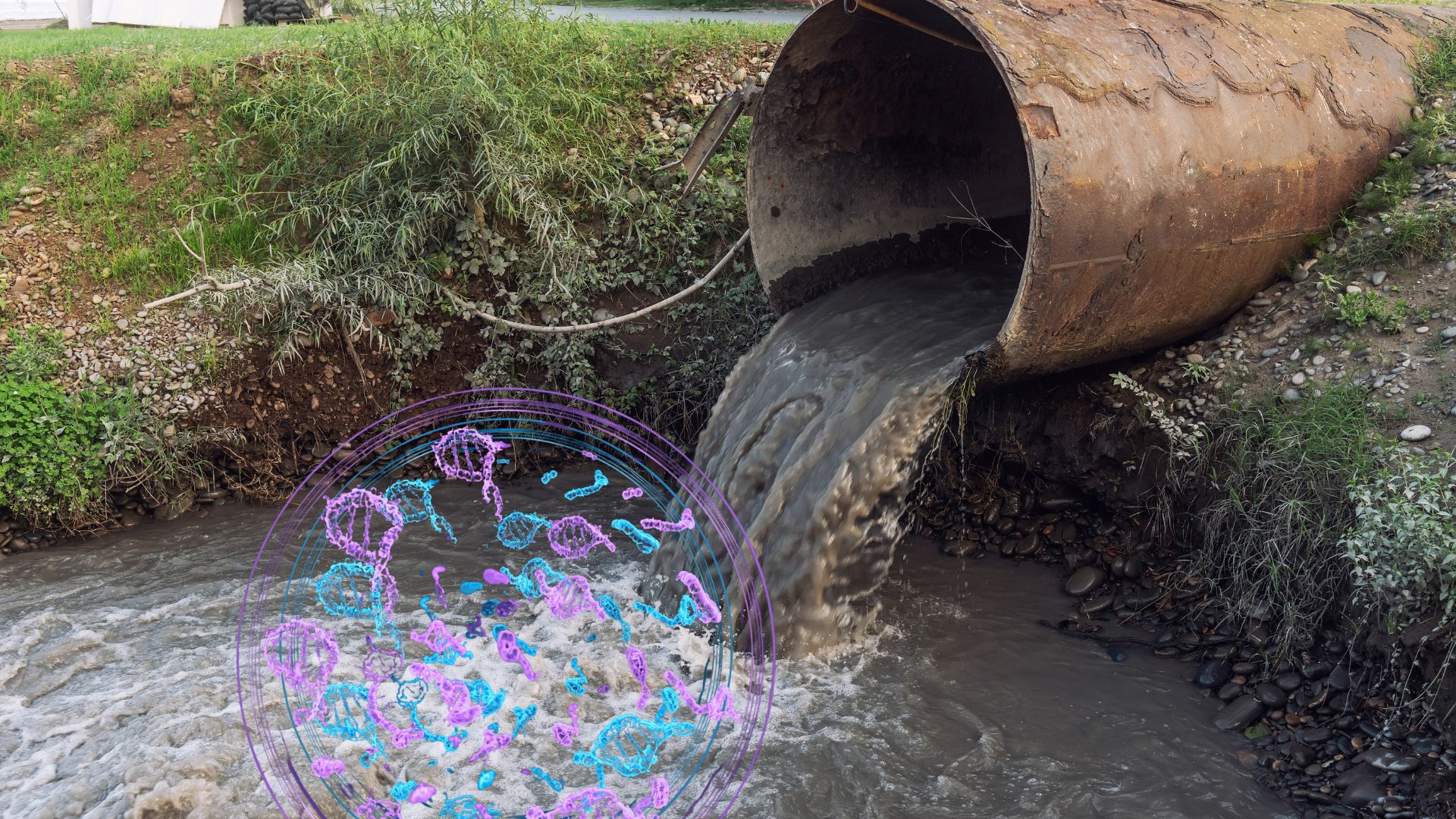
Urban sewage across India is serving as a massive breeding ground and a conduit for genetic exchange for some of the world’s most dangerous superbugs, according to a new study. Researchers from BRIC-Translational Health Science and Technology Institute (THSTI), University of Cambridge, UK, University of Calcutta, and the National Institute of Pharmaceutical Education and Research (NIPER-Guwahati) have discovered that city drains are active laboratories where bacteria trade DNA to become resistant to our antibiotics. By analysing samples from six Indian states, the research team found that urban sewage is teeming with high concentrations of antibiotics and mobile genes that enable different species of bacteria to share survival strategies.
The study, conducted between June and December 2023, is one of the most comprehensive examinations of India’s urban resistome, the collection of all antibiotic-resistant genes in a given environment. The team collected a total of 381 sewage samples from across six Indian states to ensure a broad, representative map of the country’s urban resistome. Specifically, the samples were gathered from Assam, Haryana, Jharkhand, Uttar Pradesh, Uttarakhand, and West Bengal.
They then used a three-pronged approach. First, they used shotgun metagenomics, which involves sequencing all the DNA in a water sample to identify every microbe present. Second, they used mass spectrometry to precisely measure the concentrations of 11 different antibiotics. Finally, the researchers developed a simple, low-cost dipstick assay. Similar to a rapid COVID-19 test, this tool can detect resistance genes in minutes without the need for a laboratory. This allowed the team to compare the bacteria found in community sewers directly with those in hospital drains, revealing that the superbugs in our streets are genetically almost identical to those causing life-threatening infections in clinics.
The researchers found that drugs like amoxicillin and tetracycline are present in the water at levels high enough to stress bacteria but not always kill them. This sublethal pressure forces the microbes to evolve rapidly. Most alarmingly, the team identified 82 specific resistance genes associated with mobile genetic elements. These function like biological pendrives, allowing a bacterium to plug in specific genes that could be pathogenic and pass along the ability to ignore modern medicine.
The spread of resistance is attributed to a phenomenon known as horizontal gene transfer. In the dense, nutrient-rich environment of a sewer, bacteria can pass genes sideways to their neighbours, even if they are entirely different species. When we improperly dispose of medicine or when antibiotics pass through the human body into the toilet, the sewage becomes a training camp. Only the bacteria that can survive the drugs live to reproduce, creating a population of multidrug-resistant pathogens that can eventually find their way back to humans through contaminated water or the environment.
The researchers, however, note that the seven-month study period was too short to fully understand how seasonal changes, like the heavy monsoon rains, might flush out or concentrate these bacteria. Additionally, while the study covered six states, it primarily focused on urban centres, leaving a gap in our knowledge regarding antibiotic resistance in rural India.
The research provides a vital blueprint for protecting public health. By treating our sewage systems as a surveillance window, researchers can detect emerging diseases and resistance trends before they become outbreaks. Even regions with very few resources can now monitor their waste, providing an early warning system that could save countless lives by helping health professionals work against the next generation of superbugs.