Entomologists have identified two new species of fruit flies and recorded a group of insects never before seen in India during a research expedition in the Himalayan foothills. The study was led by Maneesh Pal Singh of the College of Horticulture and Forestry in Himachal Pradesh and David Lawrence Hancock, an independent researcher from the United Kingdom. Their findings, centred in the Solan region of northern India, significantly expand our understanding of the country's biodiversity and the complex world of the subfamily Trypetinae.
The team discovered the new species using a combination of traditional sweep nets and a specialised, patented female attractant called Solan Bait. This innovative bait allowed them to lure and study flies that are often difficult to find in the wild. By using microscopes to examine the detailed patterns on the wings and the microscopic structures of the flies' reproductive organs, the researchers confirmed that these insects had never been formally described from India.
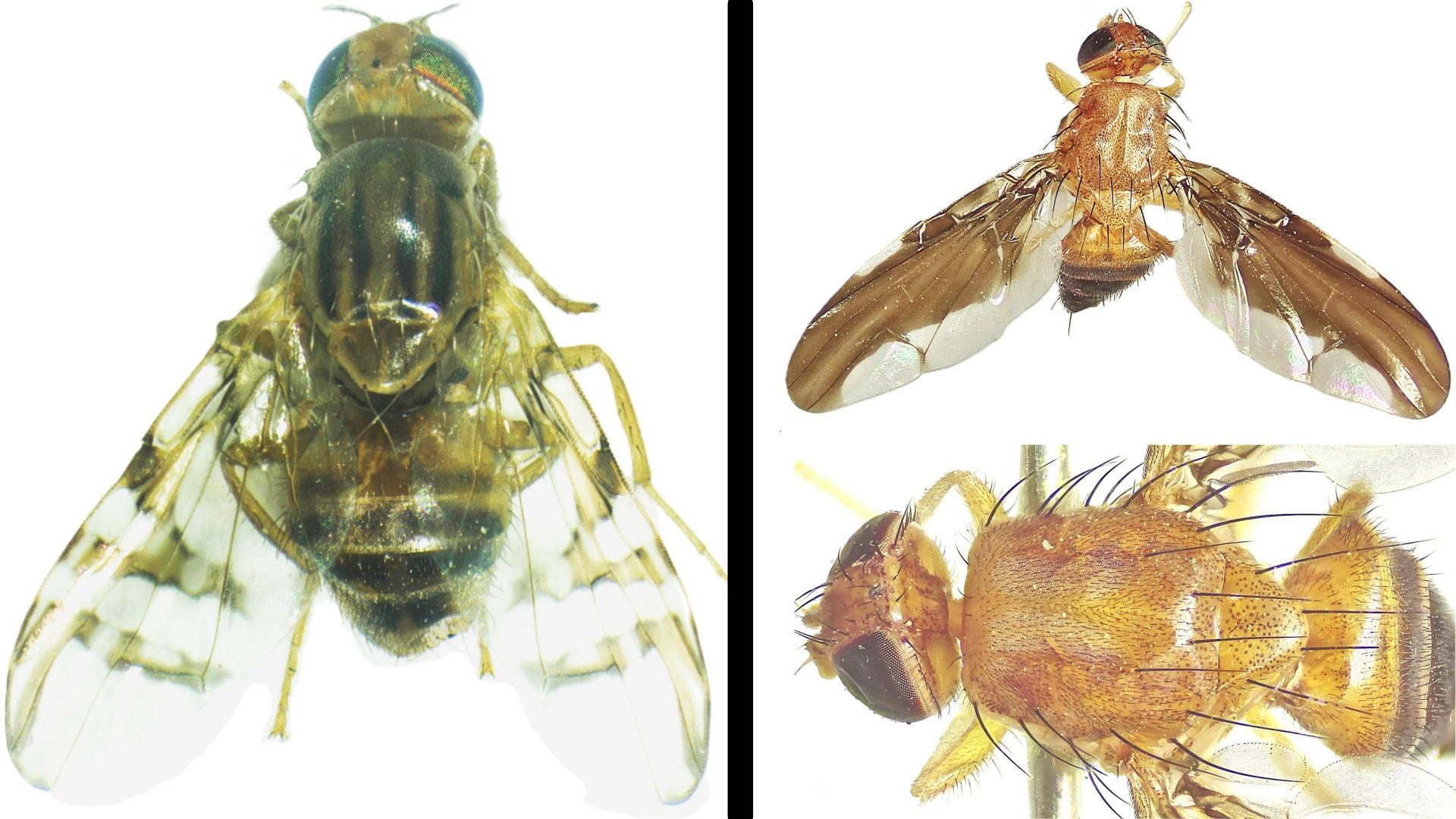
The first new species, named Acidoxantha paratotoflava, is a medium-sized, greenish-yellow fly. It is distinguished from its closest relatives by having four distinct black stripes on its thorax and larger black spots on its abdomen. The researchers also noted unique "hook-like" structures in the male’s anatomy. Its name, paratotoflava, was chosen because of its striking resemblance to another known fly, A. totoflava, which the researchers now believe may have been misidentified in India in the past.
The second discovery, Hemilea suneriae, is a reddish-brown fly covered in prominent black dots. What sets this fly apart is its unique wing pattern, which features a single clear "window" (hyaline indentation) in an otherwise dark area, whereas its closest relatives usually have two. This species holds a personal connection for the lead author; the name suneriae is a tribute to the late Verma Suneri, Maneesh Pal Singh's mother.
Beyond these new species, the study marked a major milestone by recording the genus Rhagoletis in India for the first time. This group of flies is known worldwide for affecting fruit crops, yet it had remained undetected in India until this investigation. Additionally, the researchers finally solved a century-old mystery by capturing and describing the male of Euphranta nigripeda, a species where only the female had been known to science since 1913.
These discoveries highlight the rich, untapped biological diversity of the Himalayan region. By identifying these flies and their host plants, such as the Silk Cotton tree (Bombax ceiba), scientists can better understand the local ecosystem and the roles these insects play in the environment.