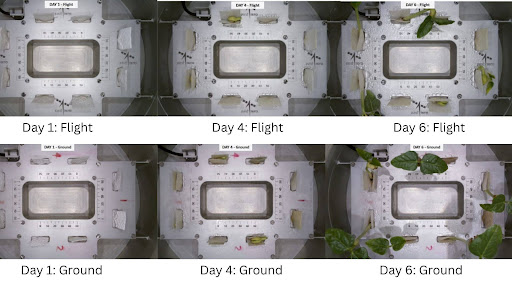
India has successfully cultivated the country’s first plants in space, sprouting black-eyed peas aboard a repurposed rocket stage orbiting Earth. Launched in late December 2024 by the Indian Space Research Organisation (ISRO), the Compact Research Module for Orbital Plant Studies, or CROPS, operated completely autonomously in Low Earth Orbit. The experiment successfully germinated five of eight cowpea seeds and grew them to the two-leaf stage in microgravity. This breakthrough marks a crucial first step in developing bio-regenerative life support systems, which will be essential for providing fresh food and oxygen to astronauts on future long-duration missions to India's planned Bharatiya Antariksh Station and beyond.
The CROPS experiment was propelled into space by the ISRO’s Polar Satellite Launch Vehicle (PSLV) during the PSLV C60 mission, which launched from Sriharikota in late December 2024. ISRO repurposed the rocket's spent fourth stage, which would typically be discarded as space debris, into an orbiting laboratory known as the PS4 Orbital Experiment Module (POEM). After deploying its primary satellite, this repurposed stage stabilised into a 350-kilometre circular Low Earth Orbit to serve as an unmanned, cost-effective platform for scientific research. For the CROPS payload, the POEM platform provided standard electrical power through its solar panels and shared main battery, while also enabling the crucial telemetry and telecommand communication links that allowed scientists on Earth to remotely control and monitor the autonomous space farm.
The researchers designed a miniature, hermetically sealed greenhouse capable of operating without human intervention. Before launch, the team sterilised the seeds and glued them to special wicking pouches embedded in a multi-layered artificial soil made of porous clay granules and slow-release fertiliser. Once the spacecraft stabilised in orbit, a command was sent to open a gas-pressurised valve, injecting exactly 320 cubic centimetres of water into the soil. Inside the dark, sealed box, a custom lighting system automatically cycled on and off to mimic a sixteen-hour terrestrial day. These lights use specific warm and cool white LEDs engineered to emit the precise wavelengths of blue and red light required by the plants' chlorophyll for photosynthesis. Onboard cameras and sensors beamed daily images and environmental data back to Earth, revealing that the first seed sprouted just four days after watering.
Growing plants in microgravity presents unique scientific challenges, and the CROPS experiment provided interesting insights into how biology adapts to space. Without Earth's gravity to guide them, the emerging plant shoots grew in random directions rather than straight up. The microgravity environment also altered the module's physics. On Earth, warm air naturally rises and cold air sinks, creating circulation. In orbit, the absence of this natural convection caused warm air to pool around the module's heaters, leading to a temporary temperature spike that engineers had to correct via remote commands. Additionally, water in the artificial soil dispersed uniformly rather than being pulled downward by gravity, which caused localised water pooling that slightly skewed the onboard moisture sensor readings.
International space agencies have previously grown plants on the International Space Station using systems like NASA's VEGGIE. ISRO’s CROPS adds to this growing body of work by demonstrating a highly integrated, self-sufficient agricultural laboratory that operates entirely autonomously on a low-cost, repurposed piece of space debris. However, the researchers noted that the experiment was designed solely as a short-duration proof-of-concept to reach the two-leaf stage, rather than to sustain the plants through a full seed-to-seed life cycle. The team also acknowledged that the unmanned platform's limited communication bandwidth reduced the resolution of images sent back to Earth. The tests also show that due to the absence of gravity, future modules will need improved automated thermal and moisture regulation to prevent localised heating and water pooling observed during this flight.
The demonstration provides evidence that our food could one day be grown in an extraterrestrial environment, whether in orbit around Earth or on another cosmic body. Closer to home, the closed-loop, highly efficient farming technologies developed for the harsh vacuum of space could also provide insights for efficient farming on Earth. As climate change disrupts traditional farming, these automated, resource-conserving planetary greenhouses could play a vital role in ensuring global food security.