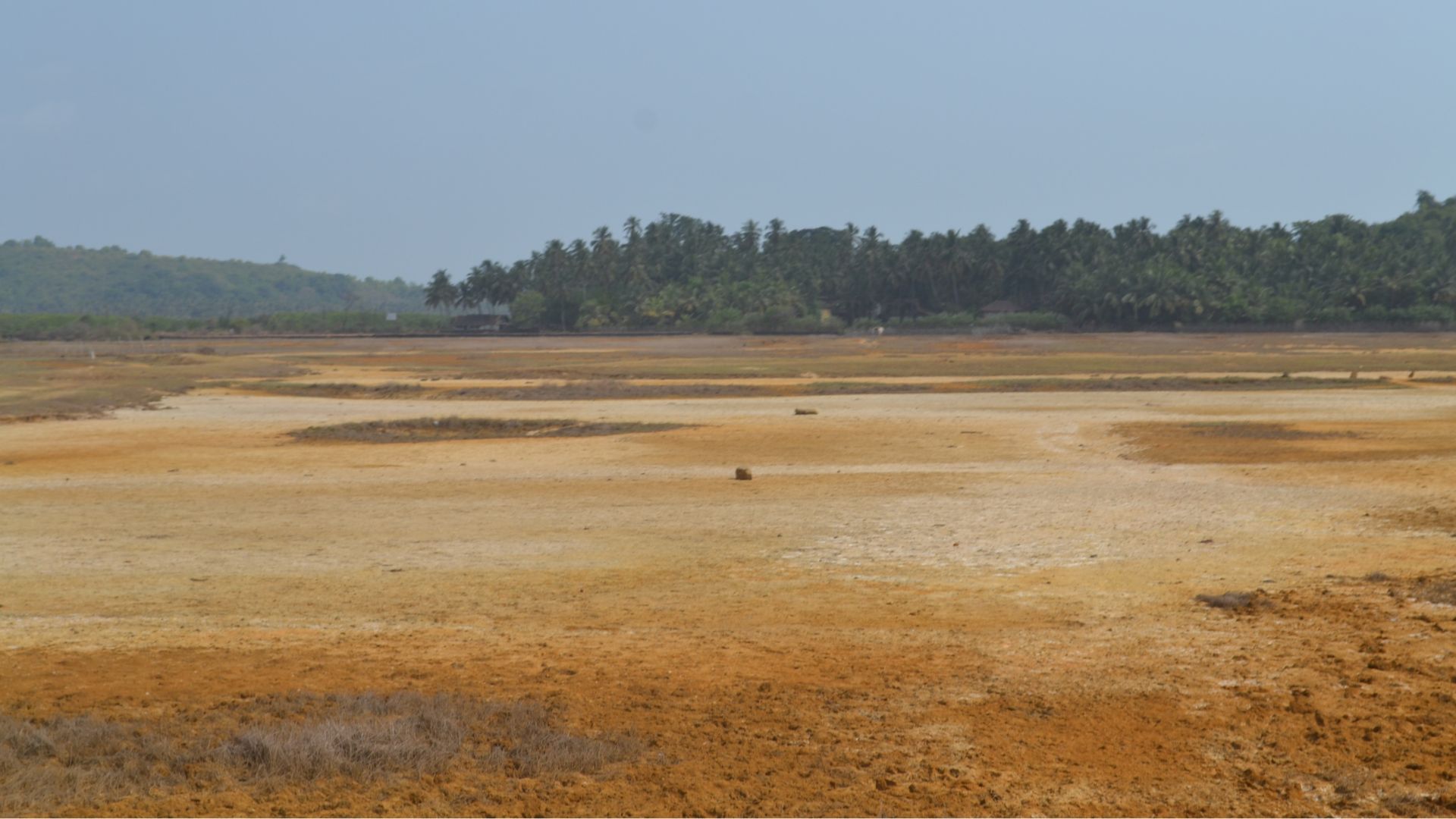
In a step toward securing clean drinking water for millions living near the ocean, scientists from India and Lithuania have successfully demonstrated how injecting freshwater into salty underground aquifers can temporarily push back intruding seawater. Working along a five-kilometre stretch of the Arabian Sea coastline in Malappuram district of Kerala, the research team from the Indian Institute of Technology (IIT) Roorkee and Kauno Technologijos Universitetas, Lithuania, conducted a series of real-world experiments to tackle the growing global crisis of saltwater intrusion.
As sea levels rise and coastal populations rapidly deplete local groundwater, denser seawater naturally seeps into these underground freshwater stores, rendering them undrinkable. To combat this, the researchers used a technique known as managed aquifer recharge, in which they pumped large volumes of freshwater directly into the ground to see whether it could form a stable, usable reserve in the highly saline environment.
Finding the right spot for this experiment required the team to conduct a detailed analysis of an area. They first utilised a geophysical technique called Vertical Electrical Sounding, which sends electrical currents into the earth to map the layers below. Because saltwater conducts electricity much better than freshwater, they were able to pinpoint the underground zones where seawater had most heavily invaded. After confirming these salty hotspots by testing groundwater for elevated sodium and chloride levels, they drilled one injection well and two observation wells into the shallow, sandy aquifer.
Because freshwater is less dense than saltwater, it naturally wants to float on top. When the researchers injected fresh groundwater into the salty aquifer, it formed an expanding bubble, or lens, of clean water that displaced the heavier seawater. They tested this by injecting three different volumes of water—2500, 5000, and 7500 litres—and used automatic sensors to continuously monitor the water's electrical conductivity to track the salinity minute by minute.
Their study found an exponential relationship between the freshwater and the amount of usable water within the aquifer. Pumping more water not only linearly increased the time the freshwater stayed pure, but it also vastly multiplied it. For example, injecting 7500 litres created a freshwater pocket that maintained safe salinity levels for over 35 hours, an increase of 500% compared to the smallest injection.
While previous research has largely been confined to laboratory computer simulations and small-scale artificial sand tanks, the new research validates the results in the real world. By taking their experiments out of the lab and into a densely populated, humid tropical environment with complex monsoon seasons and dynamic tides, the researchers proved that this concept works in unpredictable, real-world conditions. However, the researchers caution that the technique still faces significant hurdles before it can be rolled out on a massive scale. Because the coastal sandy soil is highly porous, the injected freshwater tends to mix rapidly with the surrounding saltwater. Additionally, the freshwater's natural buoyancy means it constantly seeks to rise to the surface, potentially escaping the targeted underground storage zone.
Nevertheless, with nearly a third of the global population living near at-risk coastal aquifers, finding affordable and practical ways to secure local water supplies is an urgent priority. This field-tested strategy offers water resource managers a tangible blueprint for protecting vulnerable coastal communities from water scarcity, proving that with careful planning and science, we can successfully hold back the sea and safeguard our most precious resource.