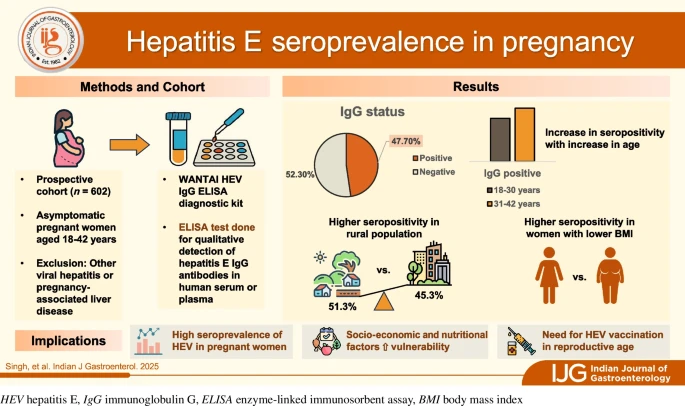
Clinical researchers at King George’s Medical University and Sanjay Gandhi Post Graduate Institute of Medical Sciences have discovered that nearly half of pregnant women in their study had been exposed to the Hepatitis E virus, a waterborne infection that poses severe risks to expectant mothers and their babies. Over the course of a year, the team tested blood samples from 602 asymptomatic pregnant women aged 18 to 42 to detect past exposure to the virus. They found that 47.7 per cent of the women tested positive for Hepatitis E antibodies, sounding the alarm for public health officials to urgently consider vaccination guidelines and infrastructure upgrades to protect this highly vulnerable group.
Hepatitis E was officially identified in 1990 after scientists noticed waterborne jaundice outbreaks that were not caused by the more common Hepatitis A or B viruses. Today, it primarily spreads through contaminated drinking water and usually causes mild liver disease in the general population. However, it becomes extraordinarily dangerous during pregnancy, especially in the third trimester. Hormonal shifts and a naturally suppressed immune system allow the virus to multiply rapidly, causing the maternal death rate to spike to between 15 and 25 per cent.
To detect past instances of an infection, the research team turned to the patient's blood. When a person is infected with a virus, their body produces specific proteins called antibodies to fight it off. Long after the infection is defeated, certain antibodies, known as Immunoglobulin G (IgG), remain in the blood as a record of past exposure. The researchers decided to find these chemical footprints of past infections. They collected blood samples from the participants and separated the serum from the red blood cells using a centrifuge.
They then analysed the components using an enzyme-linked immunosorbent assay, or ELISA test. This laboratory test changes colour when Hepatitis E IgG antibodies are present, allowing scientists to confirm whether a woman has ever contracted the virus. Alongside the blood tests, the team used standardised questionnaires to gather demographic and socio-economic data to understand exactly who was most at risk.
The results painted a detailed picture of the infection's spread and the socio-economic factors driving it. The researchers observed that exposure to the virus increased with a woman's age, reflecting a longer lifetime window to encounter the pathogen. Geography and living conditions also played a massive role, with women from rural areas showing a higher positivity rate of 51.3 per cent compared to 45.3 per cent in urban populations. Furthermore, the study revealed that a lower body mass index, indicating poor nutrition, and a lower-middle-class socio-economic status were associated with significantly higher exposure rates. This points to the harsh reality that poor sanitation, reliance on hand pumps for drinking water, and lower overall immunity due to poor nutrition heavily contribute to the spread of this dreaded viral infection.
While previous studies have reported varying prevalence rates across Indian cities and global regions, this work improves on prior research. By providing an updated estimate specifically targeting pregnant women in northern India and linking the infection directly to modern socio-economic vulnerabilities, the study offers a vital roadmap for health professionals. Currently, the world's only licensed Hepatitis E vaccine is approved in China, but as global efforts to distribute vaccines grow, policymakers can use these findings to prioritise pregnant women in developing nations. By highlighting how strongly poverty and poor water and sanitation are linked to the virus, the study also reinforces the urgent need for infrastructure improvements, ensuring that safe drinking water becomes a fundamental reality for everyone.