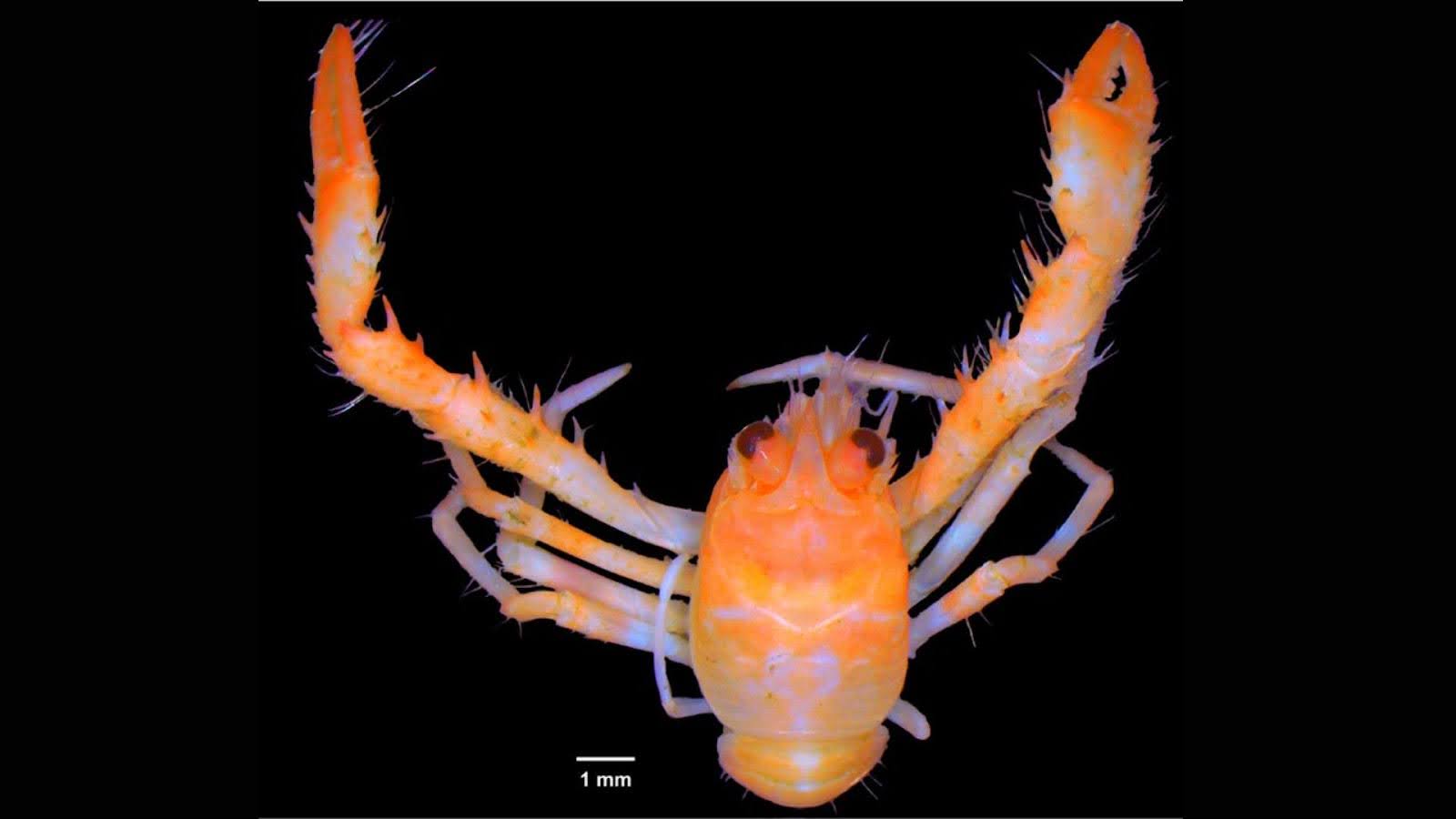
Named Leiogalathea samudragiri, the new species was found living 360 metres below the surface near Minicoy, part of the Lakshadweep archipelago. The discovery was made during a research cruise in early 2024 as part of India’s ambitious Deep Ocean Mission (Samudrayaan program). This national project aims to explore the country’s vast underwater territories, which are home to unique ecosystems that remain a mystery.
To find the elusive crustacean, the team used a heavy-duty chain dredge, a specialized sampling tool, to collect specimens from a seamount, which is a massive underwater mountain rising from the ocean floor. After bringing the specimens back to the surface, the team used stereo-zoom microscopes and digital imaging to compare the find with other known species from around the world.
While it shares a family resemblance with other squat lobsters in the Pacific and Indian Oceans, L. samudragiri has several biological fingerprints that set it apart. Scientists found that it possesses smooth, uninterrupted ridges running across the top of its shell, whereas its closest relatives have ridges that are broken or interrupted. It also features exactly six transverse ridges on the back half of its body and lacks a specific spine on its feelers (antennules) that is commonly found in similar species. These subtle physical differences confirmed that the team had found a distinct species rather than a pseudocryptic or look-alike relative.
The name given to the new species, Samudragiri is derived from two Sanskrit words: samudra, meaning ocean, and giri, meaning mountain, reflecting the seamount habitat where the lobster was first discovered.
This finding brings the total number of known species in the Leiogalathea genus to 19 worldwide. Researchers noted that the Northern Indian Ocean remains significantly less explored than the Atlantic or Pacific Oceans, and this discovery underscores the incredible biodiversity hidden within India's deep-sea mountain ranges. As the Deep Ocean Mission continues, scientists expect to find even more rare and previously unknown life forms lurking in the dark corners of the seabed.