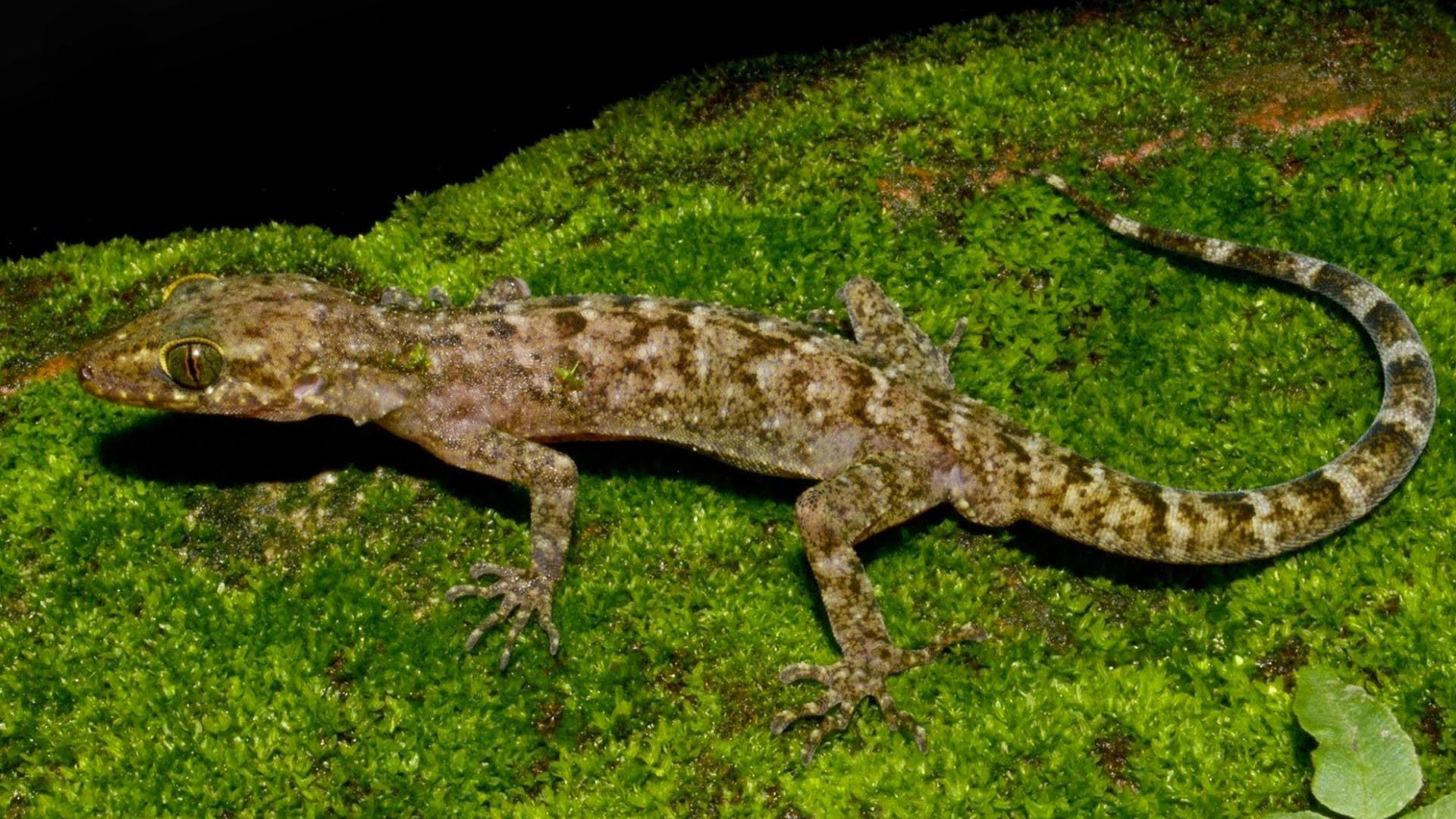
Researchers have discovered a previously unknown species of bent-toed gecko living in the forests of Assam. Found during nighttime surveys in a woodland fragment just outside Raimona National Park, the newly named Cyrtodactylus raimonaensis, or the Raimona bent-toed gecko, was identified through a combination of physical examinations and DNA analysis. The discovery was made by a collaborative team of researchers from Cotton University, Wildlife Trust of India, Animal Aid Alliance, other regional universities, and wildlife trusts. This discovery highlights the rich biodiversity of Northeast India and underscores the urgent need to protect forest patches that lie outside official government reserves.
The discovery unfolded when the research team ventured into the Kachugaon Forest Division of Assam’s Kokrajhar District to conduct targeted reptile and amphibian surveys. Because these geckos are strictly nocturnal, reaching peak activity a few hours after sunset, the researchers had to carefully search the damp forest under the cover of darkness. They eventually spotted the elusive creatures resting on the bases of large trees, scurrying over fallen logs, and navigating the loose soil of the forest floor near a slow-flowing stream. Back in the laboratory, the team sequenced the geckos' mitochondrial DNA and compared it with known species. The genetic data confirmed that they had found a distinct evolutionary lineage.
To the untrained eye, many bent-toed geckos look remarkably similar, but a closer inspection revealed that the Cyrtodactylus raimonaensis has several unique physical traits that set it apart from its closest known relative, Cyrtodactylus septentrionalis. Reaching a modest maximum length of about 7.1 centimetres, the new species is adorned with seven or eight pairs of dark brown blotches across its back, which are strikingly bordered by white markings. It also boasts a distinctly banded tail featuring thirteen alternating dark and light rings, and a highly specific arrangement of bluntly conical, bumpy scales, known as tubercles, across its body. Genetically, it differs from its closest cousins by a significant 7.2 percent margin, decisively cementing its status as a distinct species.
The researchers chose to name the newly discovered reptile Cyrtodactylus raimonaensis as a tribute to the nearby Raimona National Park. Established in 2021, the park serves as a critical refuge for diverse flora and fauna in a transitional zone between the towering hills of Bhutan and the floodplains of the Brahmaputra River. Historically, this complex landscape has been under-explored by herpetologists, meaning many small, cryptic species have likely gone unnoticed. The research team recommends that this new gecko currently be classified as Data Deficient on the IUCN Red List until further field surveys can determine the full extent of its habitat and its vulnerability to habitat loss.