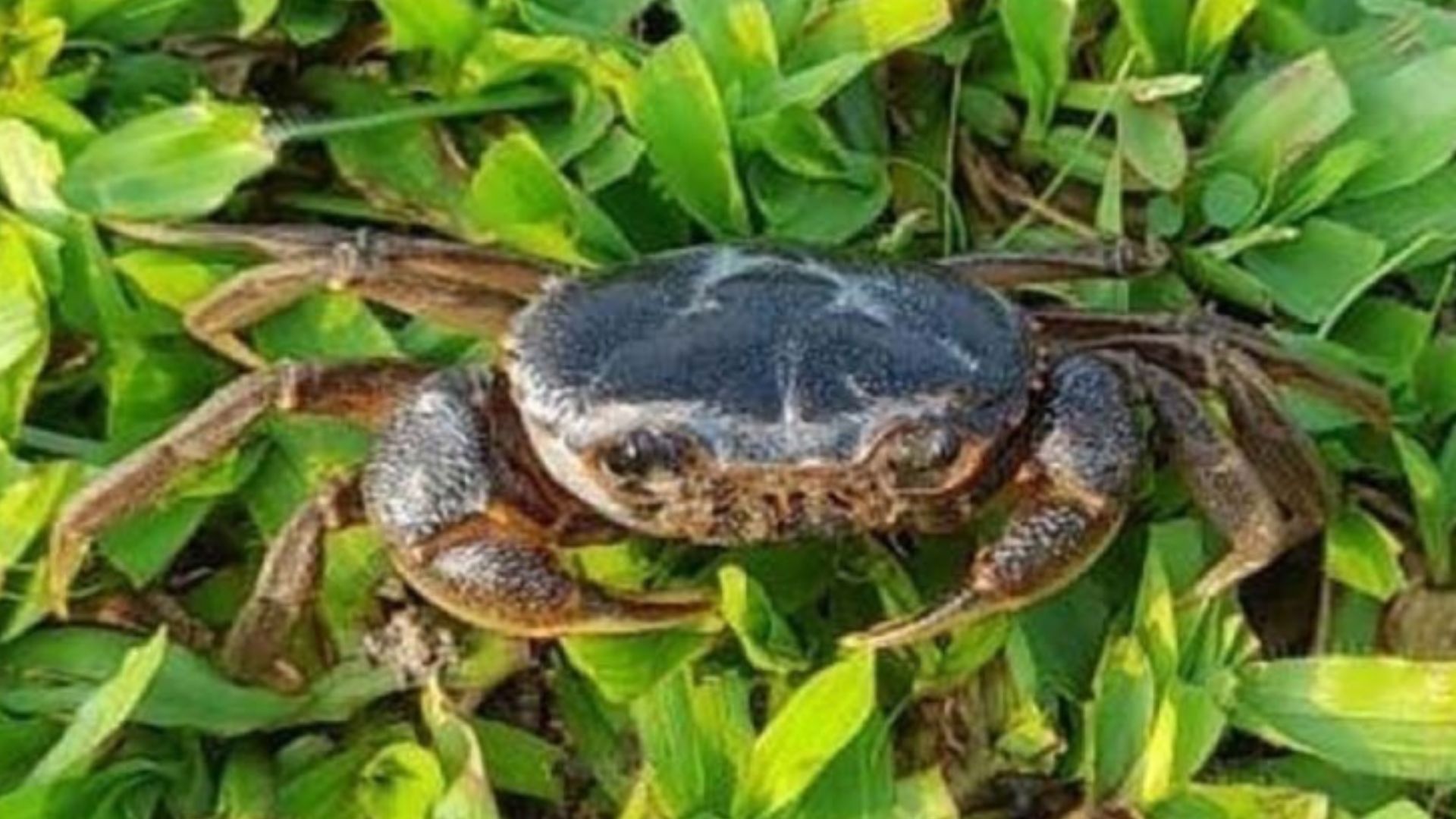
Scientists have discovered a new species of freshwater crab beneath the agricultural fields of West Bengal. Named Indopotamon alipurduarense, the elusive crustacean was unearthed by researchers Ram Krishna Das from Asutosh College and Santanu Mitra from the Zoological Survey of India. The pair stumbled upon the previously unknown creature during a wildlife survey of the sub-Himalayan Dooars region, an area celebrated for its dense forests, sprawling tea gardens, and rich but underexplored biodiversity.
The crabs were discovered living in remarkably deep burrows, plunging up to 1.5 metres into the muddy soil of local rice fields in Uttar Rampur village. The researchers noted that these highly secretive animals spend the vast majority of the year hidden securely underground. They only emerge from their subterranean homes during the region's heavy rainy season, making them visible to researchers and locals only between May and August. The crab’s newly assigned scientific name, alipurduarense, is a direct nod to its origins, honouring the Alipurduar district of West Bengal, where the unique species resides.
To confirm that it was indeed a new species, the researchers compared the specimens to their closest known relative, Indopotamon woodmasoni. While the new crab sports a striking greyish shell bordered with vibrant orange-red edges and claws, the true defining differences are structural and reproductive. Indopotamon alipurduarense boasts a visibly deeper and broader shell. The specialised male reproductive appendages, known as gonopods, are stouter with an abruptly narrowed section and a blunt tip, unlike the sharply pointed organs of its cousins. Similarly, the female’s reproductive openings (vulvae) are spaced much wider apart and are uniquely covered by a protruding sternal plate.
This fascinating find marks only the second species ever recorded in the Indopotamon genus and pushes the total number of known freshwater crab species in India to 183. Freshwater crabs are vital to local environments, acting as nature's recyclers by breaking down nutrients and serving as living indicators of a healthy, unpolluted ecosystem. The discovery shines a spotlight on the Eastern Himalayas as a massive hotspot for biological diversity, reminding us that countless undiscovered species are still waiting to be found, sometimes hiding just beneath our feet in the most ordinary of rice fields.