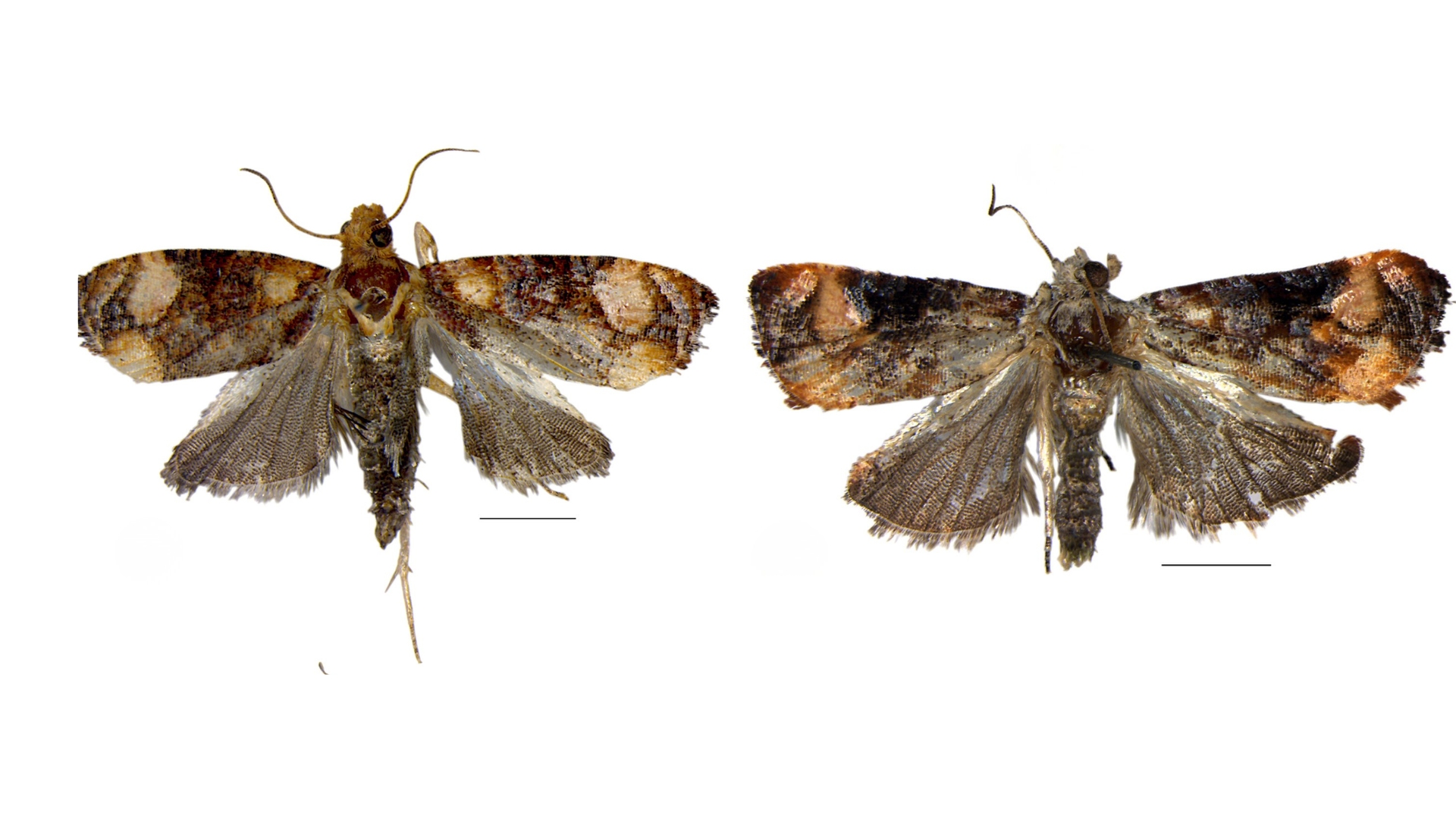
Scientists have discovered two brand-new species of moths in the lush, remote forests of Northeast India, marking the first time this entire group of insects has been recorded in the country. The discovery was made by researchers Shashank P.R. and Santhosh Naik from the National Pusa Collection at the ICAR-Indian Agricultural Research Institute. The findings expand the known range of the genus Eudemopsis, a group of micromoths previously thought to live only in East Asian countries such as China, Japan, and Vietnam.
The discovery took place during an expedition in August 2024 within the Upper Siang and Lower Dibang Valley districts of Arunachal Pradesh. To find the tiny insects, the team trekked into the Mishmi Hills during the rainy season, setting up light traps equipped with mercury vapour lamps and LepiLEDs. These traps mimic the moon’s light, tricking the nocturnal moths into landing on white sheets where the researchers could collect them for study.
The two new species have been named Eudemopsis hunliensis and Eudemopsis gobuka. While they belong to a family known for being difficult to tell apart, the researchers identified several unique diagnostic characters. E. hunliensis is distinguished by its distinct brownish-purple scales on its head and a unique pitcher-shaped structure in the male anatomy. In contrast, E. gobuka features dark grey hindwings and a distinctive subrectangular patch on its forewings, which separates it from its closest relatives in Vietnam.
The names of the new moths pay direct tribute to the land where they were first found. The name hunliensis is derived from the town of Hunli in the Lower Dibang Valley. Similarly, gobuka is named after the village of Gobuk in the Upper Siang district, honouring the specific geographic location of the find.
This discovery brings the global count of Eudemopsis species to 17 and represents the westernmost record of the genus in Asia. According to the researchers, the find underscores the rich and underexplored biodiversity of the Eastern Himalayas. They suggest that many more species likely remain hidden in these evergreen forests, waiting for future expeditions to bring them to light.