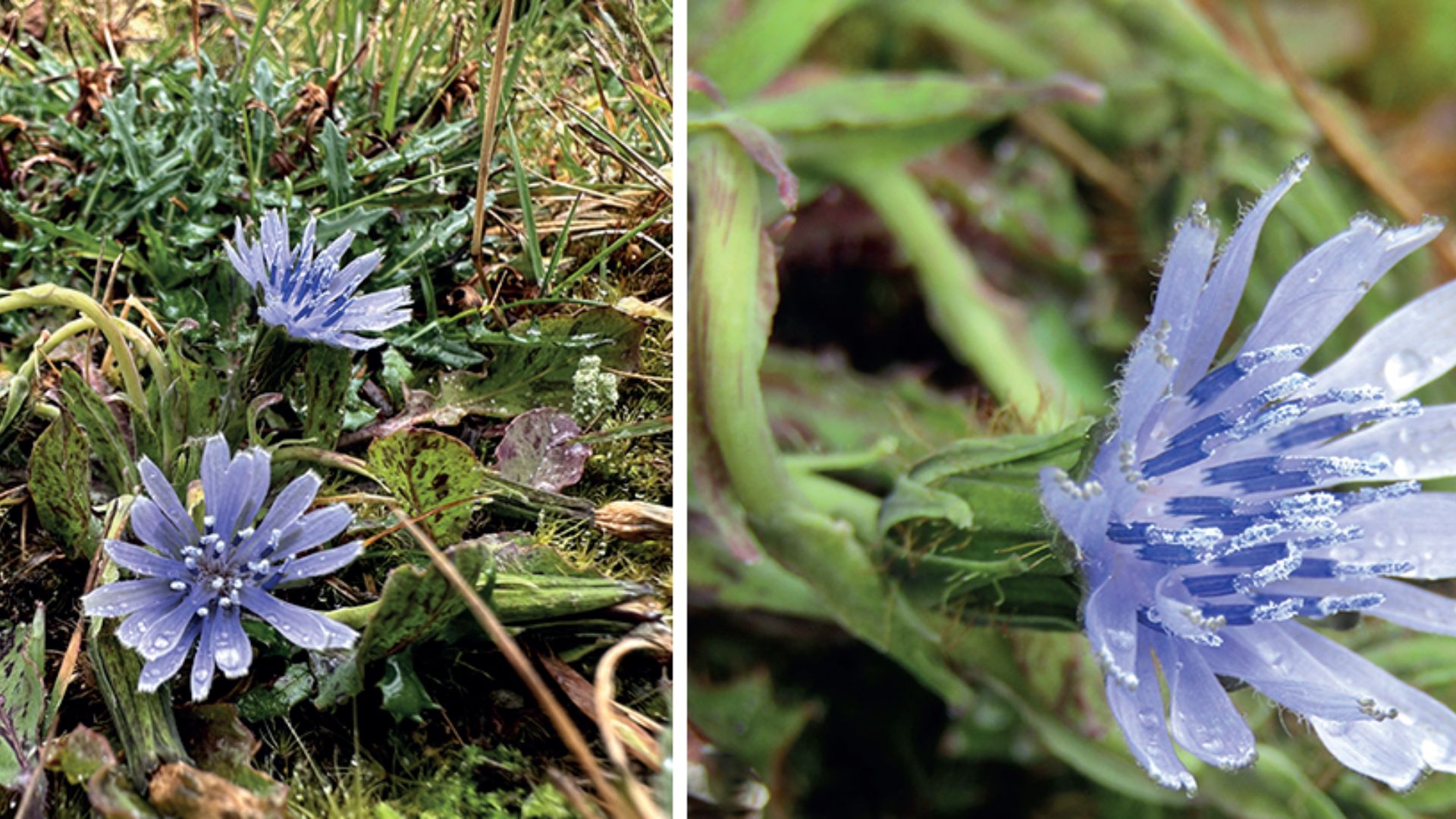
A team of botanists has discovered a new plant species with uniquely hairy purple petals high in the alpine grasslands of the Sikkim Himalayas in India. Found during a recent expedition to document mountain plant life, the rare herb, newly named Melanoseris pendryi, was identified by researchers from the University of Calcutta and the University of Kashmir, along with the Forest and Environment Department of the Government of Sikkim. The team was conducting a floristic survey in the remote Lungthun and Thombu areas of eastern Sikkim, at altitudes over 4,000 metres, when they spotted the peculiar specimens. After detailed microscopic analysis, the scientists realised they had stumbled upon an entirely new species.
Interestingly, the new Himalayan plant has a tiny but highly unusual feature on its flowers. Under the microscope, researchers noticed that the plant's lavender-coloured petals, known as ligules, were covered in long, white hairs on their undersides. This characteristic has never been seen before in any other species within the Melanoseris genus. Alongside this unique fuzziness, the plant also features a shorter reproductive tube and a distinctly stout seed structure, which helped researchers clearly separate it from its closest relatives, M. lessertiana and M. qinghaica. Growing close to the ground amongst cushion-like shrubs, the plant relies on a fleshy, branching root system to survive the harsh alpine conditions.
The research team chose the scientific name Melanoseris pendryi as a tribute to Dr Colin Pendry of the Royal Botanic Garden Edinburgh. As the editor of the Flora of Nepal, Dr Pendry is highly respected for his extensive contributions to the taxonomy and understanding of flowering plants across the Himalayan region.
While the discovery is a thrilling addition to India's biodiversity, it comes with a stark warning. The botanists could locate only about 32 mature plants across a tiny area of just 2.5 square kilometres. Because these fragile mountain habitats are currently under heavy disturbance from tourism and livestock grazing, the scientists have provisionally recommended that Melanoseris pendryi be classified as Critically Endangered, sparking an urgent call for conservation in the area.