A team of researchers has discovered a tough, new species of bacteria in the waters of the River Ganges that possesses a remarkable ability to break down toxic chemicals and survive heavy metal pollution. The newly identified microbe, named Brachybacterium netajii, was recently uncovered by a research team led by scientists from Netaji Mahavidyalaya, University of Burdwan, Indian Institute of Technology (BHU), and Hiroshima University in Japan. By investigating water collected from the Hooghly region of West Bengal, the researchers found a microscopic organism that could one day play a crucial role in cleaning up industrial waste and producing valuable biotechnological enzymes.
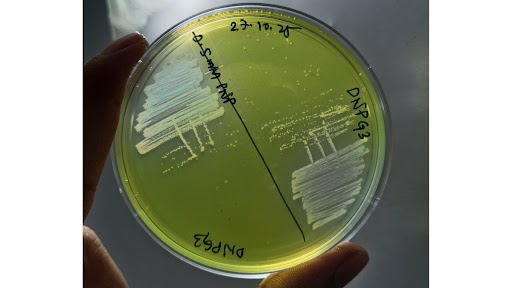
To coax this unique bacterium out of the murky river water, the scientists used a laboratory technique known as an enrichment culture. They placed the river water samples into a nutrient-poor environment and provided p-nitrophenol (PNP), a toxic industrial chemical, as the only available food source. While most organisms would die in these conditions, this specific bacterium thrived by eating the toxic pollutant, allowing the researchers to successfully isolate and study it. By mapping the bacterium’s entire genetic code and studying its physical traits, a process called polyphasic taxonomic characterisation, the team was able to prove that they had found a completely new species.
What makes B. netajii truly special is its ability to thrive where others perish. Unlike its closest bacterial cousins, this new strain can safely degrade PNP and boasts extreme resilience, surviving high concentrations of toxic heavy metals like arsenic, cadmium, lead, and mercury. It is also halotolerant, meaning it can withstand highly salty environments containing up to 9% salt. DNA sequencing and chemical tests revealed that its cellular makeup is unique. It features specific fatty acids in its cell structure, notably ones known as C11:0 and C10:0 2-OH, which are absent in its closest relatives. Furthermore, its genome is packed with unique genomic islands, chunks of DNA likely absorbed from other organisms, that contain instructions for producing industrial enzymes and natural protective shields, such as a compound called ectoine that helps it survive extreme environmental stress.
To honour this impressive resilience, the scientists named the new species Brachybacterium netajii. The name is a tribute to the famous Indian nationalist leader Subhas Chandra Bose, widely known by the respectful Hindi and Bengali title "Netaji," which translates to "respected leader." Bose was a strong advocate for science, modern education, and technological self-reliance. The researchers felt his legacy was perfectly captured by a homegrown microbe that could one day help India achieve environmental security by cleaning its polluted waterways using natural biotechnology. The discovery of B. netajii provides a quick and environmentally friendly way to tackle pollution. Its massive genetic toolkit could soon be put to work in industries ranging from pharmaceutical manufacturing to large-scale environmental clean-ups.