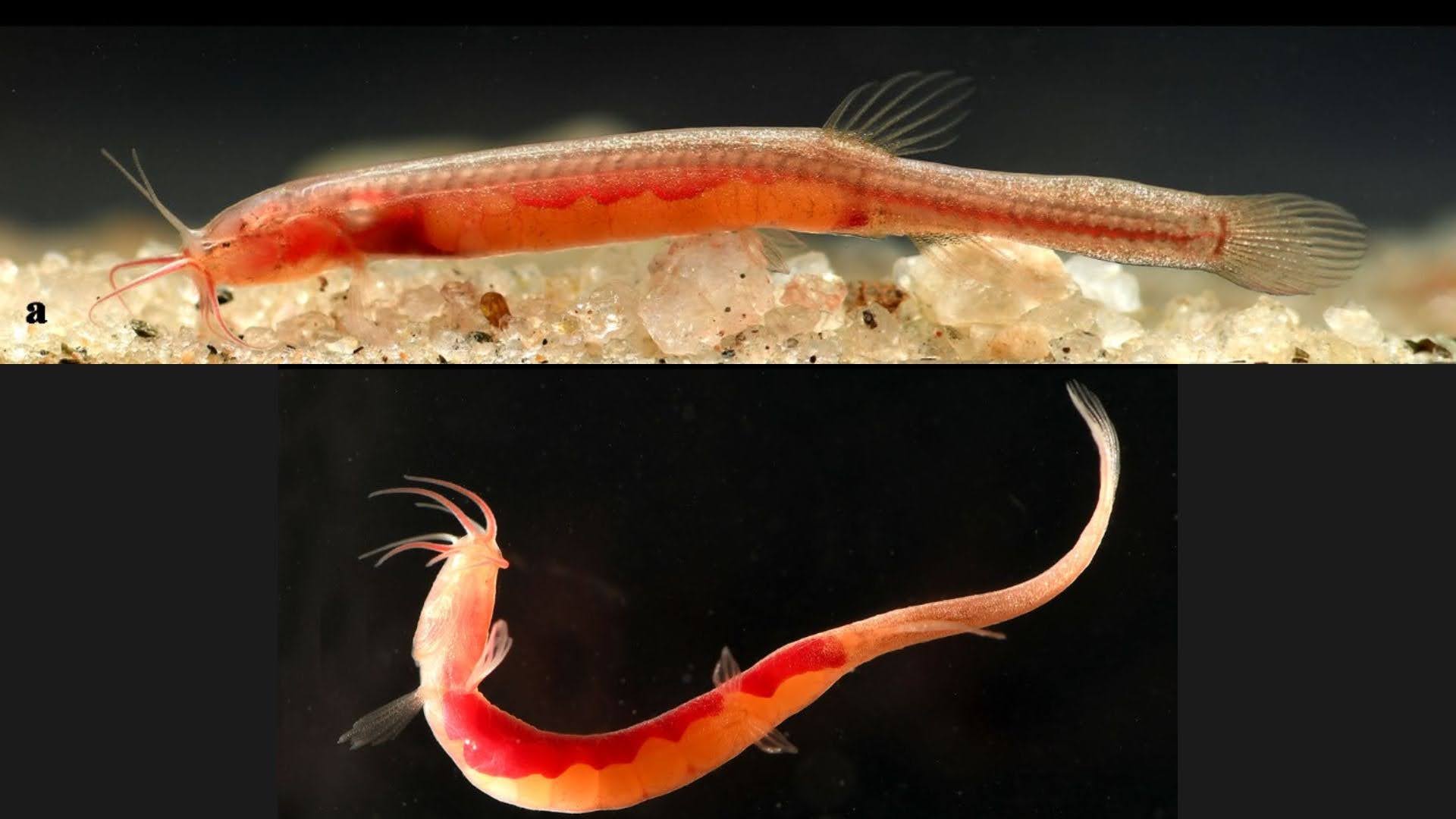
Deep underground in Northeast India, a bizarre new creature has been brought to the surface. An international team of scientists has discovered a tiny, blind, blood-red fish living in the subterranean waters of Assam. Named Gitchak nakana, this unusual loach is the first groundwater-dwelling fish ever discovered in Northeast India, offering a rare glimpse into an underground aquatic world.
The remarkable discovery was entirely accidental. The elusive fish was scooped out of a single, concrete-ringed dug-out well in a small village in Assam's Goalpara District, near the foothills of the Shillong Plateau. Because groundwater-dwellingor phreatobitic fishes live deep within underground aquifers, they are notoriously difficult to find. Researchers from Senckenberg Naturhistorische Sammlungen Dresden, Germany, Assam Don Bosco University, Dhanamanjuri University, and others were only able to study the species when locals pumped water from the well, effectively flushing the hidden inhabitants into the light of day.
Gitchak nakana is exceptionally weird, even among subterranean creatures. Measuring less than an inch long (around 20 millimetres), it is considered a miniature fish. Because it lives in perpetual darkness, it has completely lost its eyes and body pigment. Instead of typical fish colouration, it appears a striking translucent blood-red when alive, simply because its red blood vessels and liver are visible right through its skin.
What truly separates Gitchak nakana from its closest fish relatives, however, is its bizarre skeleton. The fish lacks a bony skull roof, meaning its brain is protected by nothing more than a thin layer of skin. It also has a highly modified spinal column and strangely elongated, upward-curving neck bones. To survive in the dark, the fish relies heavily on its modified, elongated whiskers, called barbels, that are covered in taste buds, allowing it to feel and taste its way through its pitch-black habitat. Furthermore, while related fish lay thousands of tiny eggs, this species produces only a few unusually large eggs, a likely adaptation that ensures its few offspring have enough yolk to survive in a food-scarce underground environment.
The unique name of the fish pays tribute to its striking appearance and its local origins. Nakana is derived from the local Garo language, combining the words na-tok (meaning 'fish') and kana (meaning 'blind').
Subterranean fishes are a global rarity, making up less than one per cent of all known fish species. While caves in nearby Meghalaya are known to host underground fish, finding one in the waterlogged, sandy soils of the Brahmaputra river valley is highly unusual. The genetic analysis suggests this strange red fish split from its closest relatives over 20 million years ago, quietly evolving its bizarre, brain-baring traits deep in the dark waters of India.