A new study shows that ancient, giant trees protected within community-managed sacred groves in India's Western Ghats are critical for forest regeneration, significantly outperforming similar trees in nearby human settlements. The study by researchers from Applied Environmental Research Foundation (AERF), Pune, and Miami University, USA, highlights how these culturally protected forest patches serve as crucial havens for fruit-eating birds that spread seeds and sustain the local ecosystem. As rural areas face increasing pressure from agriculture and development, the findings demonstrate exactly why these untouched pockets of nature are essential for the survival of large-seeded plant species.
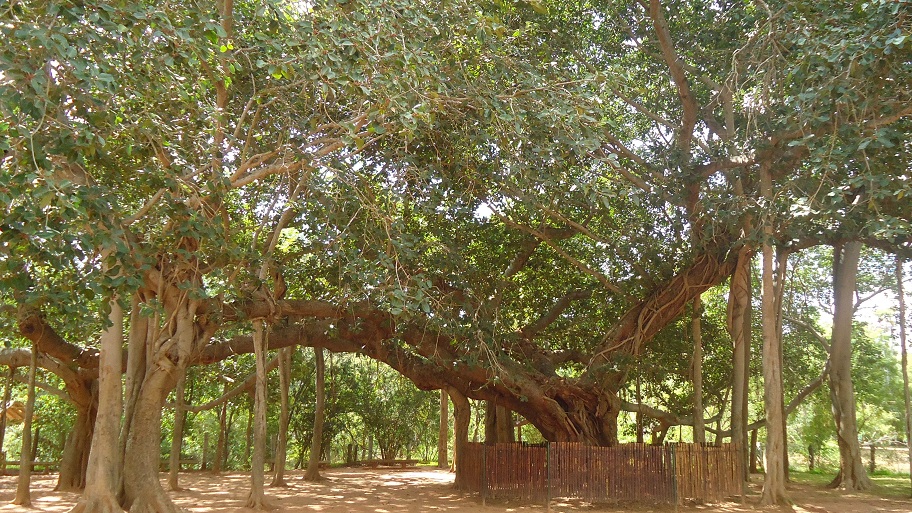
In tropical forests, large birds like hornbills eat fleshy fruits and later excrete or regurgitate the seeds far from the parent tree, a process called zoochory, or seed dispersal by animals. This process is vital for the forest's survival because it helps plants colonise new areas and prevents young saplings from competing with their parents for sunlight and soil nutrients. Giant trees, characterised by their massive size and sprawling canopies, often act as magnets for these birds, providing safe places to nest, roost, and eat.
To understand how human presence affects this ecological web, the research team compared giant trees in human settlements with heavy traffic to those in sacred groves, patches of primary forest protected by local communities due to deeply held spiritual beliefs. The researchers travelled to Vanzole Village in the Northern Western Ghats, an internationally recognised biodiversity hotspot. Guided by local knowledge holders, the scientists located and measured 82 giant trees, defined as having a trunk circumference of over one meter, across four sacred groves and two human settlements.
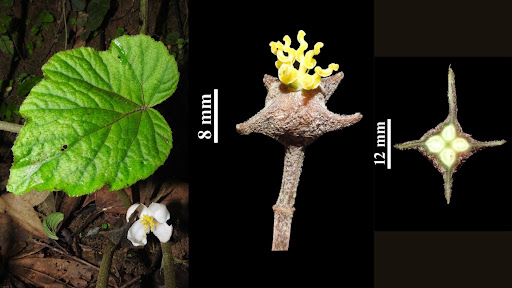
They measured the height, canopy diameter, and trunk thickness of each tree. To track bird activity, they counted the young saplings of two specific bird-dispersed plants, the fish-tail palm and the highly toxic Kajra tree, within a ten-meter radius of each giant tree's trunk. Finding these specific saplings under different tree species served as a reliable footprint, indicating that fruit-eating birds had been visiting the canopy above.
The results show that, while giant trees in human settlements were wider, likely because they grow in open spaces without competing for sunlight, the trees in the sacred groves were significantly taller and more diverse. Crucially, the researchers found that seed dispersal was far more successful in the sacred groves. Saplings of the large-seeded Kajra tree, which relies heavily on large birds like hornbills for dispersal, were found under 77% of trees in the sacred groves, compared to just 5% in the human settlements.
While scientists have long recognised that giant trees and sacred groves are individually valuable, the new study shows that human-altered landscapes can still serve as stepping stones for bird movement and seed dispersal. By directly comparing the two habitats, this study proves that while trees in human settlements provide some connectivity, they cannot replace the complex, undisturbed ecological functions of traditional sacred groves.
The researchers, however, note that the small sample size of only four sacred groves prevented statistical comparisons between the individual groves themselves, which varied slightly in their cultural maintenance. Furthermore, the scientists measured sapling presence rather than directly observing the birds, so other animals, such as bats, monkeys, or civets, could have contributed to seed dispersal.
The research highlights how community-led conservation can benefit society today. As India and the world experience rapid urbanisation and the loss of natural habitats, traditional cultural practices offer a proven blueprint for environmental protection. Maintaining these sacred groves preserves critical biodiversity and opens the door to sustainable economic opportunities for local villagers, such as carbon stock incentives and sustainable wild harvesting. This can ensure that both human communities and vital forest ecosystems can thrive together.