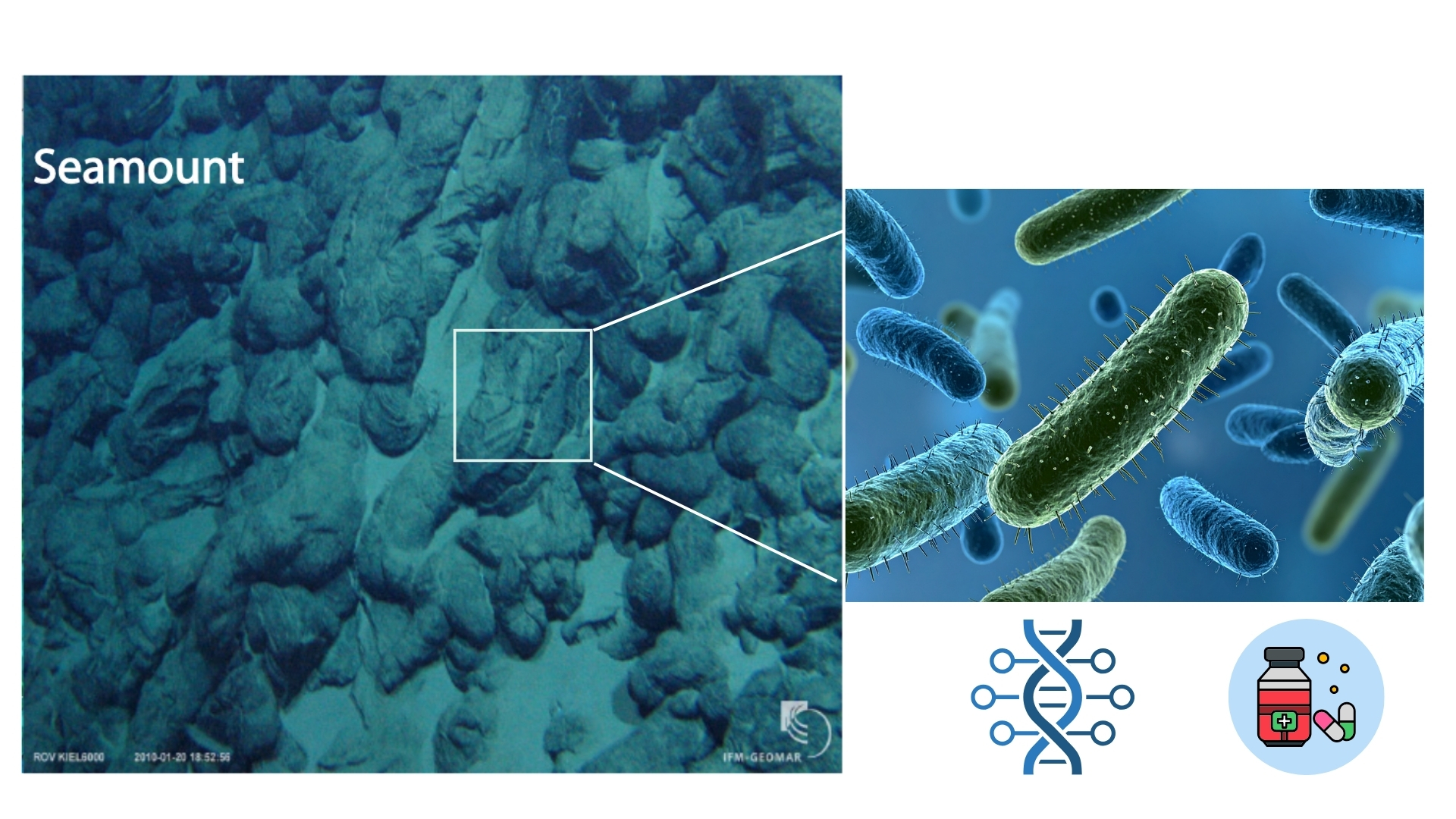
Researchers have uncovered a thriving world of microscopic life buried in the deep ocean sediments of the Arabian Sea. By examining underwater mountains known as seamounts, researchers from the Centre for Marine Living Resources and Ecology and National Centre for Coastal Research, Ministry of Earth Sciences, have mapped the DNA of complex microbial communities that play crucial roles in Earth's nutrient cycles. Significantly, these deep-sea sediments were also found to contain a wide array of genes resistant to antibiotics and heavy metals, highlighting the deep ocean as a massive natural reservoir for evolutionary survival traits.
The research team collected sediment samples from two seamount locations at depths of nearly 300 metres during a scientific cruise in 2024. Since the microbes in these sediments are adapted to cold, dark, and highly pressurised environments of deep sea, the researchers couldn’t study each of them individually. Instead, they used a forensic technique called environmental DNA (eDNA) metagenomic sequencing. eDNA is genetic material shed by organisms into their surroundings (water, soil, air) that scientists collect to identify species without needing to collect samples of each species. By extracting all the raw genetic material directly from ocean mud and using a method called long-read sequencing, they could identify which organisms were present and what biological functions their genes were capable of performing.
The study reveals an astonishingly complex underwater ecosystem. The two seamounts, despite being relatively close geographically, hosted distinct microbial communities shaped
by their unique chemical environments. One site, which was highly rich in nitrogen, was dominated by specific bacteria specialised in processing nitrogen, a vital part of the ocean's natural chemical balance. The other site featured higher levels of organic carbon and the decaying remains of photosynthesising organisms like diatoms. This carbon-rich site supported a much wider variety of life, including diverse bacteria, fungi, single-celled protists, and viruses. Together, these microbes break down dead organic matter that sinks from the surface and return essential nutrients back into the water column to support marine life.
This research, by applying modern long-read metagenomics specifically to seamounts, provides a much more comprehensive, holistic picture that links the entire microbial community to its surrounding chemical environment. However, the researchers note that the study relies on just two sediment samples taken at a single point in time. Further studies are needed to see how these microscopic communities change over time and space.
Nonetheless, the study provides a glimpse into microbial diversity on seamounts in the Arabian Sea and the threats that might be looming. The discovery of widespread antibiotic- and heavy-metal-resistance genes deep underwater, in places virtually untouched by human medicine, could mean that these survival mechanisms occur naturally and have evolved over millennia to help microbes withstand toxic metals and natural antibiotics. By cataloguing this vast genetic library, scientists can better understand how antibiotic resistance moves through global ecosystems, which is vital for combating the growing crisis of drug-resistant infections in human medicine.