Researchers have discovered two new species of earthworms hiding beneath the soil of the Western Ghats biodiversity hotspots. The discovery, made within the Silent Valley National Park in Palakkad, Kerala, adds to an ancient lineage of worms that scientists believe have lived in Asia for millions of years.
The new species, named Moniligaster girishi and Drawida reynoldsi, were identified by a team of researchers, including those from M.E.S Mampad College, Mahatma Gandhi University, Wildlife Research and Conservation Trust. The team found the specimens during a recent field survey where they literally got their hands dirty, using spades to dig through the forest floor and carefully hand-sorting the soil to find the elusive creatures. While M. girishi was found tucked away inside a decaying log in a tropical evergreen forest, D. reynoldsi was discovered moving along a trek path in high-altitude grasslands.
The naming of these new species pays tribute to the scientific community. Moniligaster girishi is named after Dr. P. Girish Kumar, a prominent Indian scientist who is actually an expert on wasps, in recognition of his help with taxonomic research. Drawida reynoldsi honors Dr. John Warren Reynolds, a legendary Canadian earthworm specialist who helped the discovery team by providing essential literature and expertise over the years.
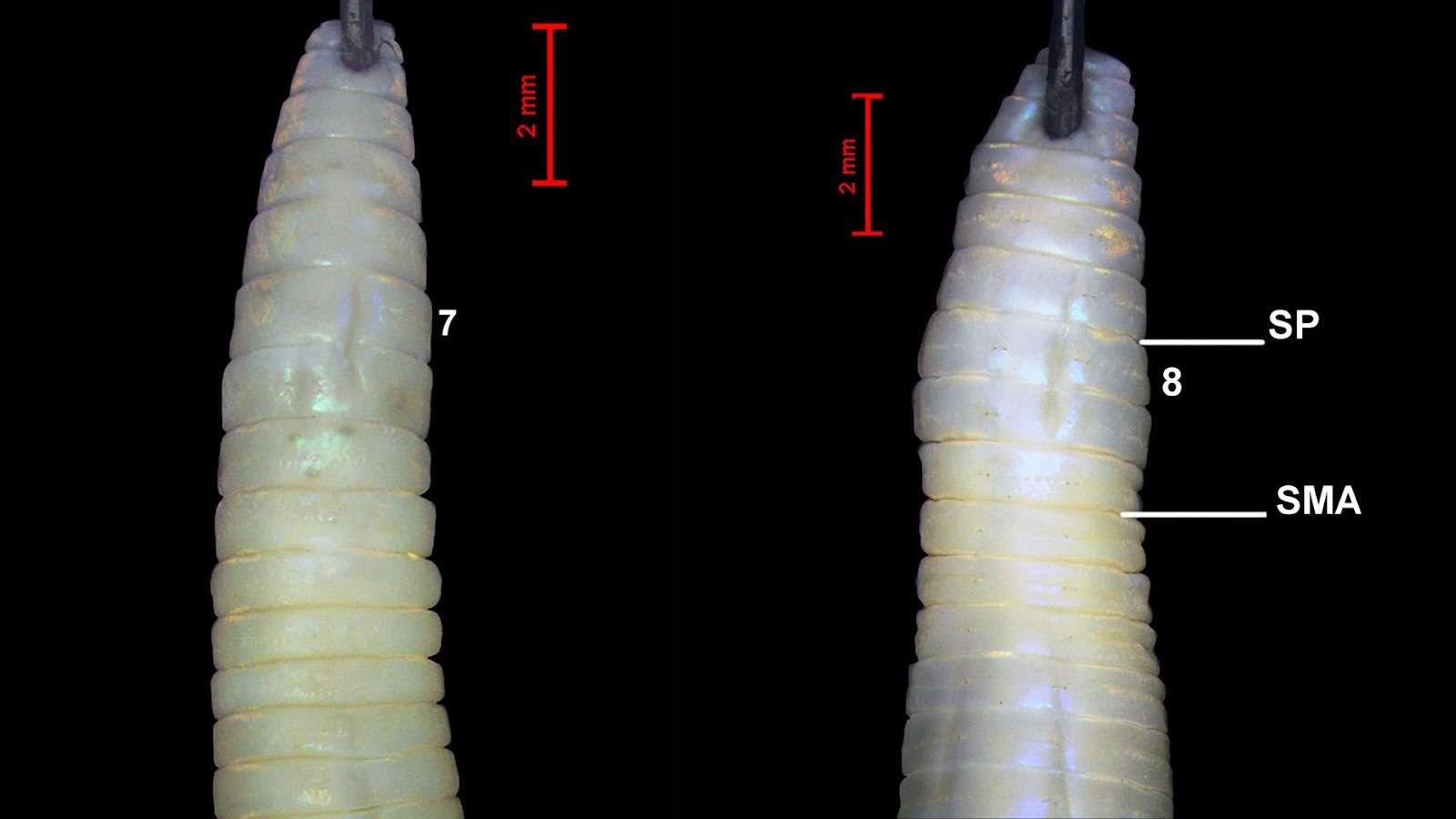
These worms belong to the family Moniligastridae, considered one of the most primitive groups of earthworms still extant. To tell them apart from their relatives, the scientists had to perform detailed dorsal dissections under a microscope, examining internal organs invisible to the naked eye.
The first new species, Moniligaster girishi, stands out because of its unique prostatic capsule, a part of its reproductive system. While its closest relatives have highly knotted, bumpy surfaces, this new worm has a smooth, tubular capsule at one end that flattens into a strap-like shape. The second discovery, Drawida reynoldsi, is easily identified by its sausage-like internal structures and a large, smooth, two-lobed sac called an atrium.
Finding these new species brings the total number of recognised species in this specific family in India to 95. The researchers say this discovery proves that even in well-known areas like the Western Ghats, there is still a massive amount of hidden diversity waiting to be unearthed. These worms play a vital role in keeping the soil healthy, and understanding them helps scientists protect the delicate balance of the tropical forests and mountain grasslands where they live.