Researchers from India and Sri Lanka have discovered two new species of fireflies in a remote, undisturbed forest of Meghalaya. The team, with researchers from Assam Don Bosco University, the University of Ruhuna, Sri Lanka, and Debraj Roy College, Assam, tracked down the glowing insects at night using simple hand nets and a visual survey. This marks the first time a new species of this specific firefly group has been described in India in over a century. This discovery brings the total number of known Indian species in this genus to 15, filling a massive, decades-old gap in our understanding of the region's insect life.
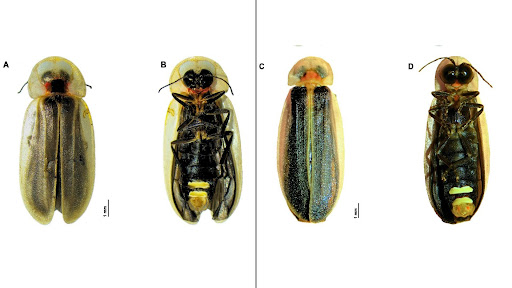
The two newly discovered insects belong to the genus Diaphanes and possess unique physical traits that easily separate them from their closest relatives. The first species, Diaphanes meghalayanus, stands out for a striking black-and-vivid-red pattern on the central shield-like plate behind its head, combined with brownish-yellow wing covers and a uniquely slender reproductive system. D. meghalayanus is named after the state of Meghalaya, where it was discovered.
The second species, Diaphanes mawlynnong, is incredibly unusual because it features rare bead-like antennae. It also boasts a bright red central plate and pale brown wing covers. D. mawlynnong takes its name from the specific village, Mawlynnong in Meghalaya, where it was found, a place famous for being the "cleanest village in Asia." The researchers chose the name to pay tribute to the village and the local Khasi people who act as stewards of the land.
The team spotted these bioluminescent creatures by hiking through dense, closed-canopy forests, betel nut plantations, and bamboo patches during the cool winter nights of February. Employing a visual encounter method, they scanned the darkness for the faint, slow, pulsating green flashes of the fireflies and collected them. Finding the flightless female of D. mawlynnong was a particular stroke of luck for the researchers, as it was discovered hiding in a soil crevice beneath a boulder, directly below where the males were flying in the canopy above.
This discovery is a major leap forward for studying biodiversity in the region, which is globally recognised as the Indo-Burma biodiversity hotspot. Before this recent expedition, the last official checklist of these fireflies in India relied on records from over a hundred years ago, leaving the firefly family largely unexplored. Fortunately for these newly discovered glowing beetles, they live in highly remote, rural areas completely free from the harmful glow of modern city light pollution, at least for now. This means their forest habitats currently remain safe, dark, and undisturbed.