In May 2023, as Tropical Cyclone Mocha battered the Bay of Bengal, a team of Indian scientists used an autonomous deep-sea glider to capture what happens beneath the waves during such a violent storm. The researchers discovered that the cyclone’s immense power churned the cold, nutrient-rich water from the deep ocean to the surface. This intense mixing not only cooled the ocean but also triggered a massive bloom of microscopic marine plant life, accompanied by a surge in oxygen levels. The observations provide a rare glimpse into the biological impacts of severe weather on the underwater environment.
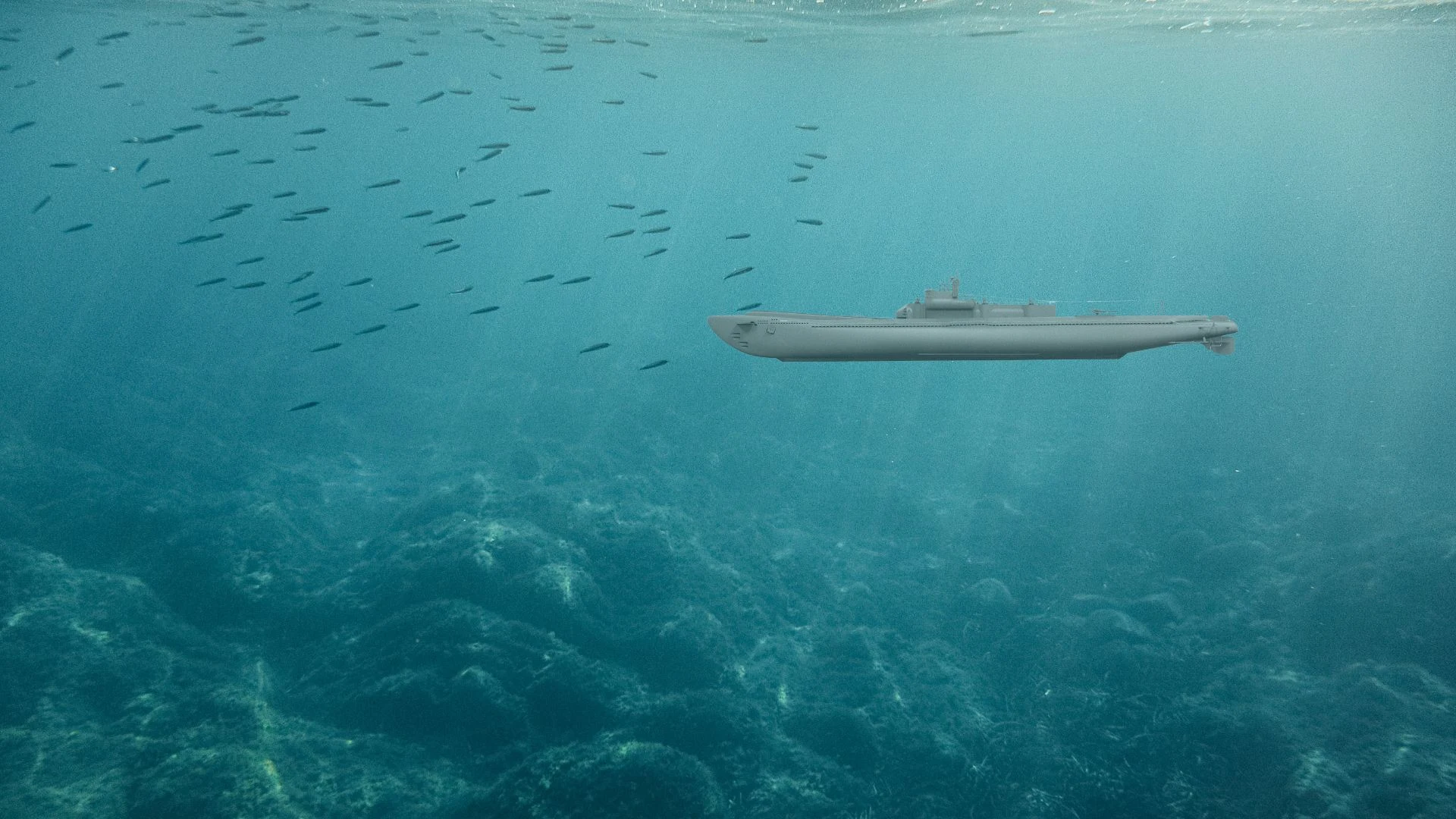
Researchers from the Indian National Centre for Ocean Information Services (INCOIS) deployed a Slocum G3 deep-sea glider. Built by Teledyne Webb Research, it is a torpedo-shaped Autonomous Underwater Vehicle (AUV), or underwater drone, that moves by shifting its internal weight and changing its buoyancy. Remotely piloted from the shore, the glider continuously dove to depths of up to 1,000 metres and surfaced to beam back data via satellite. As the cyclone passed directly overhead, the glider recorded a significant drop in sea surface temperature of about 2.5 degrees Celsius and a mild increase in salinity.
Interestingly, it also detected a massive spike in chlorophyll, the green pigment in plants, which serves as an indicator of phytoplankton growth. The Bay of Bengal is normally highly stratified, meaning it has a stable layer of warm, fresh water at the surface due to heavy monsoon rains and river runoff. This strong layering usually prevents deep, nutrient-rich waters from rising to the sunlit zone, leading to low biological productivity. However, Mocha’s ferocious winds broke down these natural layers, driving a physical process called upwelling. This physical disruption drew vital nutrients from the dark ocean depths up into the surface layers.
The sudden availability of food and sunlight at the surface sparked a frenzy of photosynthesis, leading to two distinct peaks in phytoplankton growth. The strongest peak occurred 8 days after the storm passed, due to the clearing of heavy storm clouds. This photosynthetic boom simultaneously pumped large amounts of dissolved oxygen into the surface waters. The glider even tracked the daily breathing of the ocean, recording higher oxygen levels during the day when the marine plants were actively photosynthesising and lower levels at night when they were consuming oxygen to respire.
In the past, researchers had to rely largely on satellites to track ocean colour and temperature. However, satellites are virtually blind during cyclones because the massive storm clouds block their view, creating large data gaps. Sending a traditional research ship into a violent, churning ocean is far too dangerous, while drifting robotic buoys do not take measurements frequently enough to capture the rapid changes caused by a fast-moving storm. The deep-sea glider solved these problems by safely riding out the storm underwater, providing continuous, high-resolution measurements of both physical and biological changes day and night, directly in the cyclone's path.
By deploying a glider during Cyclone Mocha, the study proves that autonomous drones are the future of extreme weather research. By safely collecting high-resolution data where satellites are blinded and ships cannot operate, this pioneering mission provides the perfect blueprint for scaling ocean monitoring, refining climate models, and ultimately improving critical storm forecasting.