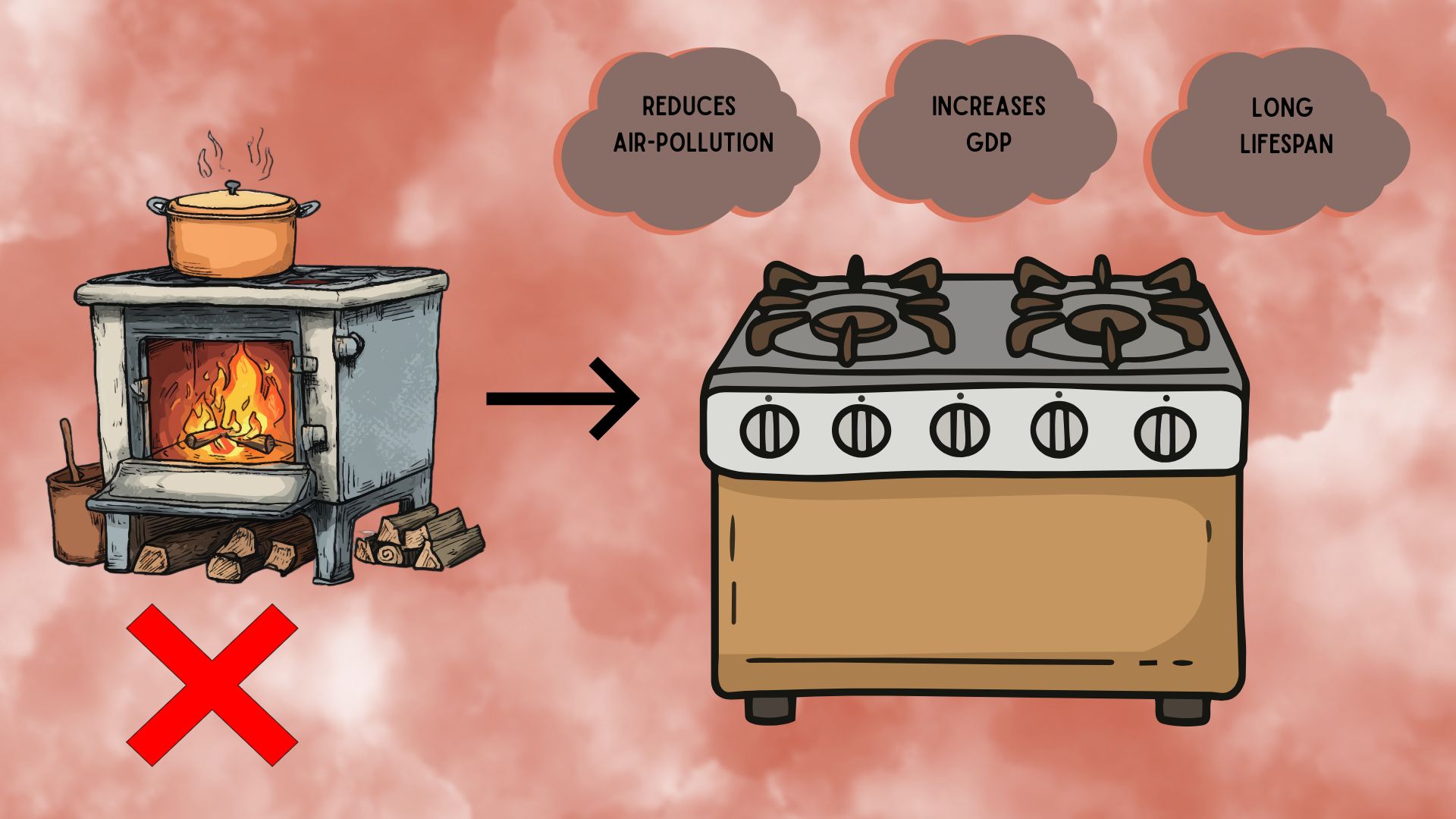
A new study has found that India could save hundreds of thousands of lives and boost its economy by meeting international air quality standards. Researchers from Research Triangle Institute (RTI International) and the University of Maryland discovered that the key to addressing air pollution-related illnesses lies in transforming how millions of people cook at home. By reducing outdoor pollution and shifting away from burning wood and dung in kitchens, the study shows, India could prevent up to 675,000 premature deaths each year.
The team analysed data, including digital records, satellite imagery, and global health statistics, from every district in India. A high-resolution satellite database enabled the researchers to measure ambient (outdoor) air pollution across all of India at a resolution of just 1 kilometre. To understand the smoke in people’s homes, the team drew on data from the Global Burden of Disease (GBD) study. This gave them the percentage of households in each state that still rely on solid fuels like wood, coal, or dung for cooking. They combined this with health records to track 3.5 million deaths in 2019 that were linked to six specific conditions, including heart disease, stroke, and lung cancer.
Finally, to convert these health figures into economic data, the researchers examined India’s financial records. They used information on the country’s Gross Domestic Product (GDP) and average worker productivity to calculate the human capital value, which measures how much the economy grows when people live longer, healthier lives. By layering these satellite, household, and financial datasets on top of each other, they were able to predict how many lives and how much money would be saved if the air were cleaned up to meet international standards.
The research highlights a link between indoor and outdoor air quality. While India has its own national standard for fine particulate matter, known as PM2.5, the study also looked at stricter interim targets set by the World Health Organisation. The researchers found that if the government successfully reduced outdoor pollution while helping half of all households switch to cleaner cooking fuels, the economic gain would be equivalent to 4.9% of the country’s gross domestic product. This is because fewer people would die prematurely from heart disease, strokes, and respiratory infections, keeping more people healthy and active in the workforce.
The study highlights that when pollution levels are extremely high, a small reduction in smog does not significantly change the death rate because the body is already overwhelmed. However, as the total amount of pollution a person breathes in drops, every additional bit of air cleaned up has a much larger impact on saving lives. This means that to see the biggest healthbenefits policymakers must address both the smoke in the streets and the smoke in the kitchen at the same time.
By combining district-level outdoor data with household data, this study provides a comprehensive map of how air quality policies interact across the entire country. It shows that in many states, cleaning up outdoor air is less effective if people are still breathing in heavy smoke from home cooking fires.
However, the researchers noted that household pollution data were available only at the state level rather than at the district level, potentially masking differences between urban and rural areas. Nevertheless, the research provides a roadmap for an effective environmental policy that addresses both outdoor and indoor pollution simultaneously. It also highlights the fact that clean air is a fundamental pillar of economic growth and public welfare. By showing that addressing this can save more than half a million lives annually, the study offers a compelling argument for urgent, integrated action that could define the health of the next generation.