On the 22nd of March, World Water Day is observed to advocate sustainable management of water. This day serves as a global call to action to address the water crisis and protect this valuable resource. Despite supporting nearly 18% of the global population, India possesses just 4% of the world's freshwater resources, making the nation highly vulnerable to severe water stress, rapid groundwater depletion, and climate-induced droughts. To combat these mounting challenges, India has been actively focusing on a mix of large-scale initiatives, such as the Jal Jeevan Mission, which aims to provide safe piped water to rural households. But how successful have these initiatives been, and what should we be doing to conserve this life-sustaining liquid?
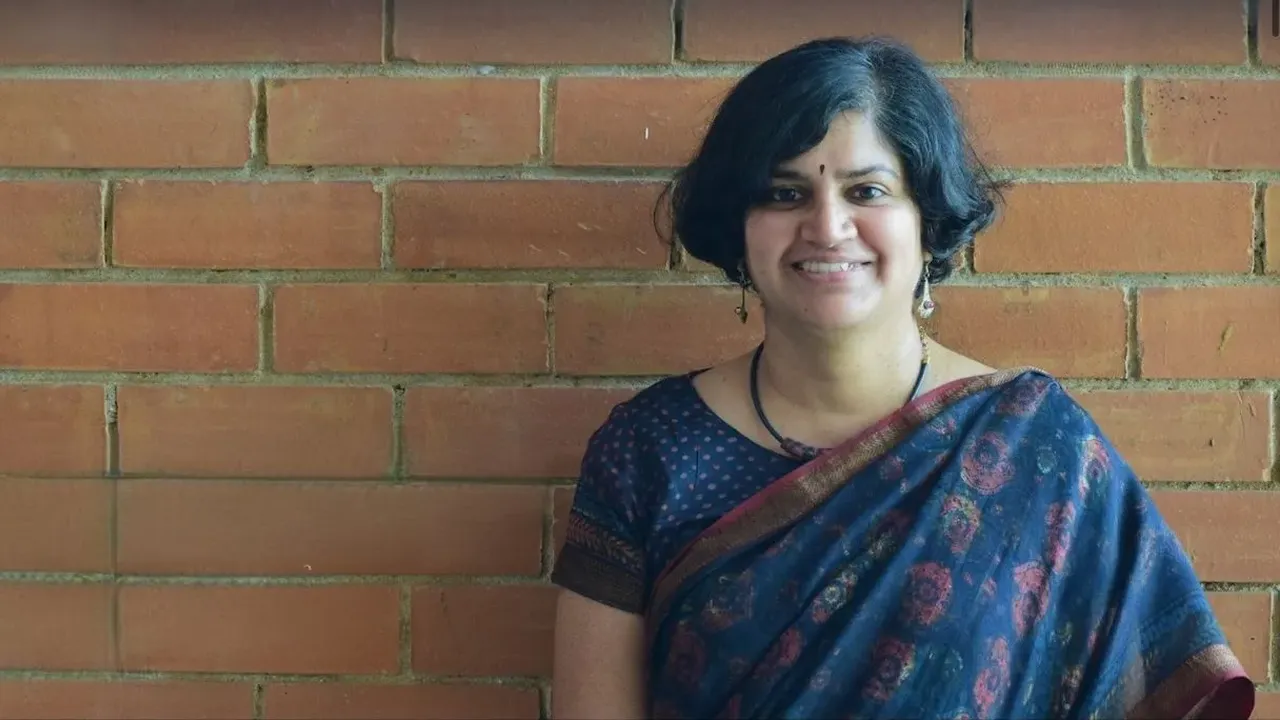
To dive deeper, Research Matters (RM) caught up with Dr Veena Srinivasan, Executive Director, WELL Labs, to get her views on water use and conservation.
In this insightful interview, she highlights the urgent need for transparency and policy reform to address the escalating water crisis. She offers a grounded perspective on water conservation, policy, and education. Read along to ponder her views.
RM: Climate change greatly affects the rainfall trends. How can technology advance our understanding of rainfall patterns?
Dr Veena: In my opinion, one of the biggest drawbacks of meteorological data is its paywall. One thing that AI/ML can help us do is to unlock some of this data. For example, to understand how accurate climate forecasts have been in Bangalore, in Orissa, or somewhere else? We need to know if the error is a systematic bias in the climate forecast or a random error. We don't have an answer to this question because we issued a climate forecast, but the government doesn't provide historical forecast data. What did the forecasting agencies say was going to happen, and what actually happened?
This means a clear role for tech is to analyse historical trends, secondly, scrape data from different sources, and thirdly, use interesting proxies to simulate the available data.
RM: Bangalore and other metropolitan cities often face water shortage problems during the summer. One plausible solution is to use tankers when the piped water supply fails. What do you think we can do to improve our ecosystem?
Dr Veena: To reiterate, tankers are not the best solution as a drinking water resource. And so, you don't want to make a tanker ecosystem more efficient without first addressing the better solutions – using piped water, groundwater, stormwater and wastewater more. But if effort is spent on tankers, it should be in creating a transparent and reliable resource. There is a tanker mafia operating in Bangalore. More transparency, tanker registration, and an Uber-like service would help. Next, standardisation in terms of water quality. I mean, many of these tankers are delivering really poor-quality water. Who even knows what contamination is there? Not every household that receives tanker water can treat some of these pollutants. It could be a public health hazard. So, standardisation, transparency, and improved testing protocols would make the tanker system more efficient. But again, at a higher level, we don't want tankers in the first place. Any well-run city should not have tankers at all.
RM: Water is essential beyond drinking. Goods and essential commodities cannot be harvested without water. Do we have good policies for the utilisation of virtual water?
Dr Veena: Virtual water is the water embedded in goods and commodities. It was an idea proposed by John Anthony (“Tony”) Allan, from King’s College London. His argument (for which he was awarded the Stockholm Water Prize in 2008) was that water-scarce regions should be net importers of virtual water, and water-abundant regions should become exporters of virtual water. Basically, water is too expensive to move. But you can grow a water-intensive commodity like rice in Assam and import it to water-scarce regions like Rajasthan. So instead of building expensive physical infrastructure that is often politically infeasible or prohibitively expensive, you use trade to address water crises.
Returning to your question, I don’t think India has formal policies on virtual water utilisation. However, building on the importance of virtual water and its information-signalling value would benefit India. For example, Punjab is a larger exporter of virtual water. Punjab receives approximately 400mm of rainfall per year. The dominant cropping system is rice-wheat, which requires roughly 1200mm of rainfall. This depends on fossil groundwater, which will eventually disappear. But changing the state’s entire agricultural system is not easy.
A valuable use of virtual water data in this context is to create transparency through high-quality data analysis and visualisation. For instance, showing policymakers and the general public how much water is exported from water-scarce regions.
RM: Urban expansion is killing the natural reservoirs. We have damaged multiple natural reservoirs. How does future planning help protect our ecosystem?
Dr Veena: First, I would be careful with the word "water reservoir". In the South Indian context, by small reservoirs, you mean “tanks”. These tanks were created to store water. Their idea was to harvest and store water during the monsoon for use in a second crop or for livestock during the dry season. Now, with urbanisation, the purpose of the tanks has changed. They are no longer used for irrigation. As the catchment areas have become more populated, the tanks have started receiving wastewater. So even though they might have continued to carry water, residents living around them were seen as “dirty,” and they stopped serving their purpose as reservoirs.
In Bangalore, as piped Cauvery water became available, residents stopped using the tanks as a source of potable water. Preserving tanks around Bangalore requires local ownership and raising awareness of the roles these reservoirs play.
So, there are a few different things required to unwind the clock. One of them is to assess the utility of tanks. For example, a few tanks in Chennai have been completely treated and augmented to the local drinking water supply. The other is to reimagine them as multifunctional spaces that serve ecological, groundwater recharge, and flood-control functions.
RM: Adding to that, unplanned ecological expansions in the name of development projects and tourism have caused flash floods in several places. What are the policies that should be adopted to help us conserve these lifelines?
Dr Veena: We are referring to eco-sensitive zones such as Uttarakhand and Kerala here. First, we haven't done enough research yet. The science we do have is not always usable and is often confined to journal publications. What is needed is to make the data on environmental risk very transparent to any sector that is actually making investments - policymakers, banks, industrialists, insurance companies, and local dwellers.
But what is needed is not just policies on paper – because those do exist – but enforcement. Often, real estate developers grease the palms of the officials and override zoning laws and building codes. If we really care about making a difference, I will say make the data on environmental risk very transparent to people making investments – insurance companies, banks, etc.
RM: India has a rich biodiversity. People still follow traditional practices to restore water potential. However, the efforts fall short due to their limited access. How can India modulate water conservation?
Dr Veena: Traditional practices are reliant on community culture and practice. So, when the community's culture and norms are intact, it's easy to tap into and harness them. But if the place has completely modernised, then it's hard to rely solely on the traditional norms and processes.
In Bangalore, where high-rise buildings surround a tank (lake), you cannot try to invoke traditional practices. Because the challenges are new, the communities are mostly immigrant communities that may not have the same connection to place. We need to reimagine those traditional practices for the modern era, given today's stressors.
RM: And finally, your words on “water and gender”, this year’s theme for World Water Day
Dr Veena: Women often tend to be the ones who are more dependent on water in their lives, in their ability to earn a livelihood. Ironically, women play a very small role in those decision spaces. That has been the traditional argument of the problem of water and gender as well.
Interestingly, we are seeing a different version of women’s engagement arising in cities like Bangalore. Much of the active stewardship of water and lakes in communities is led by women. Many lake groups, such as “Kera Habbas,” are led by women. I like to call them the “Matriarchs of the Bangalore Lakes”.