Kuiper belt objects (KBOs) are icy remnants from the early days of our solar system, located in a vast, doughnut-shaped region beyond the orbit of Neptune. Unlike the rocky bodies found in the main asteroid belt between Mars and Jupiter, KBOs are composed primarily of frozen volatiles such as water, methane, and ammonia. Pluto is the largest and most famous of these objects, but astronomers have discovered thousands of others, including dwarf planets like Haumea and Makemake. Because they have remained largely unaltered in the deep freeze of space, studying these pristine worlds provides planetary scientists with vital clues about the formation and evolution of our solar system over 4.6 billion years ago.
7 amazing facts about the Kuiper Belt
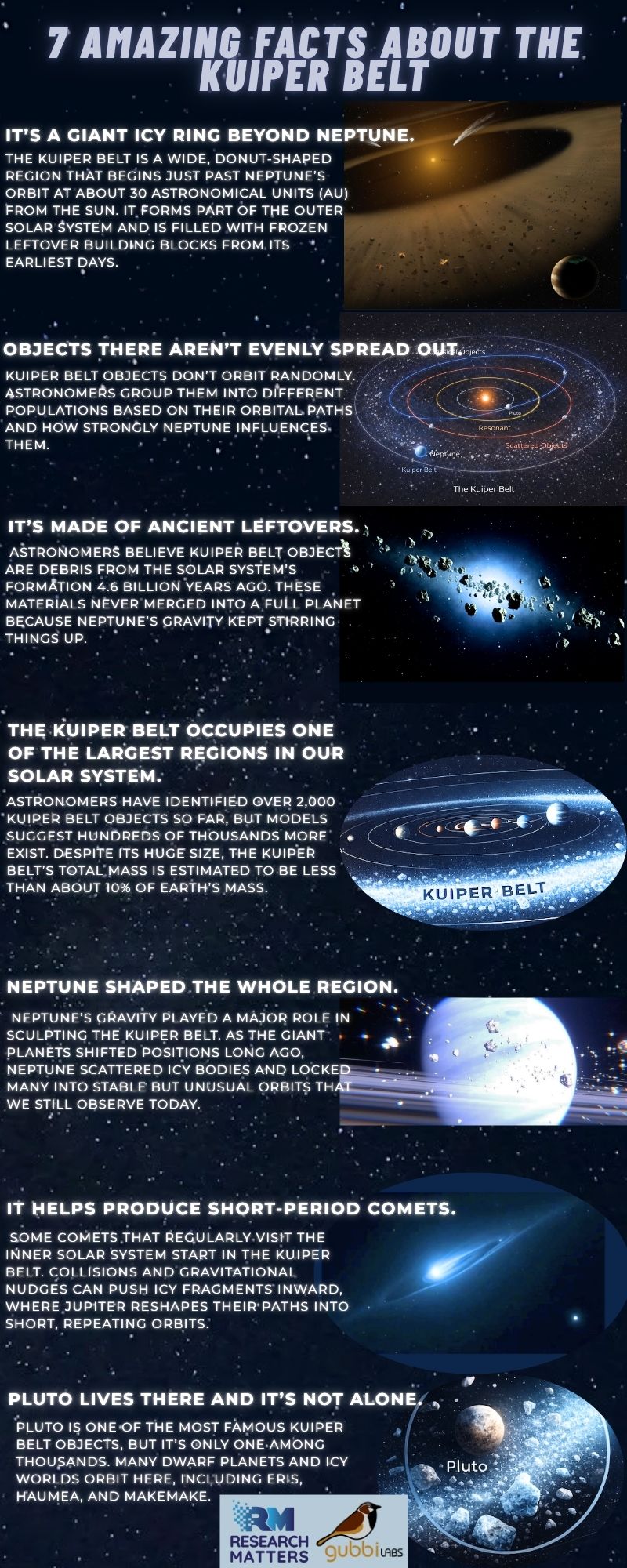
Kuiper Belt Object
7amazingfacts
SpaceSeries
Comets